Protecting Lifestyles

Protect Your Assets And Income
From Disasters And Lawsuits!

Request a Quote

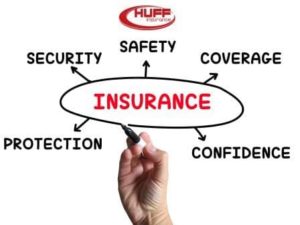
The Security & Peace of Mind Benefits Of Insurance

What Is Insurance?

Insurance, as a means of protecting a person’s interests against loss or damage has been used for at least 5,000 years — originally by traders seeking to protect their sea-going cargoes — but the first real policies, in the way we think of them today, came into being in the 17th Century.

The first true insurance company was founded in the wake of the Great Fire of London in 1666. And, in a way, that tells us something about the way some people look at insurance: they don’t worry or think about it until something awful happens and, by then of course, it’s usually too late. Insurance, after all, is about pooling your money with lots of other people so that, if things do go wrong, you can recover what you lost or pay for particular health services like healthcare without it costing you a fortune. You can’t do that after that fact!

Naturally, you, and we, hope disaster never strikes. But if it doesn’t, you should never think of that premium money as having been wasted; that wasn’t the reason you were paying in the first place. In a sense, you are buying security and peace of mind based on the fact that none of us knows what awaits us around the corner.

10 Key Benefits

When you take out an insurance policy, depending on the risk you are covering, some of the benefits you might gain include:

  • You reduce or eliminate the risk of facing sudden, major expense if you, your family or your property suffer a misfortune.
  • You have the funds to meet the costs of any liability claims made against you, when you get blamed for someone else’s misfortune.
  • You create security for yourself and your family in the event that you lose your earning power through job loss or disability.
  • You provide financial security for your family in the event of your death.
  • You are covered if someone else who isn’t insured injures you or damages your property.
  • You have the best chance of quickly recovering your lifestyle after damage to your property, with someone taking care of you while restoration or replacement is under way.
  • You improve your credit-worthiness by being recognized as a responsible citizen, and may even be able to raise funds on the security of a policy.
  • If you’re in business, you can insure against risks that otherwise might not allow you to compete against bigger, financially stronger contenders.
  • You can protect yourself against the damage caused by some of the modern financial crimes, which are otherwise difficult for you to understand and assess – like identity theft.
  • By contributing to insurance companies you are sharing in the cost of researching ways to improve our lives, making them safer and reducing risks.

Different Types Of Insurance Coverage

These days you can insure against almost any risk and uncertainty you’re likely to encounter in everyday life. Here are the main types of coverage you might consider for yourself:

Life InsuranceThere are two main types – permanent policies that pay out whenever the insured person dies and term policies that pay if death occurs within a specified period (usually 10 or 15 years). Because the first type is a guaranteed payment, coverage obviously costs more. But premiums of both types of policy depend on your age when you take it out, your gender (women live longer than men) and your general health.

Homeowners’ Insurance and Renters’ InsuranceThere is a huge variety of insurance policies you can take out to cover risks associated with your home. Obviously, if you own your home, you want to insure the buildings against loss, as well as the contents. But if someone else owns the place, your interest is in protecting your possessions rather than the structure. That’s the key difference between homeowners’ and renters’ insurance coverage.

A standard homeowners’ insurance policy covers you against losses caused, for example, by fire, storm or theft but, usually, not earthquakes or natural flooding, for which you need separate coverage. They also cover liability for injuries or damage you cause to others and may provide living expenses while your home is being repaired or rebuilt.

When taking out a policy to cover contents, it’s worth taking a quick inventory of your possessions. Also make a note of serial numbers of electronics items and take photographs in each room, which will help jog your memory in the event that you have to make a claim. As a rough guide, cover for possessions usually works out around half the value of your structural coverage.

Auto Insurance and Other Vehicles: Auto insurance is a legal requirement for most vehicles and in most circumstances. Rates vary greatly according to factors like the age of the insured and their driving record, location and, of course, type of vehicle.  A basic policy covers you for injuries to you and anyone injured in an accident and vehicle damage or theft. You’re also normally covered when driving a vehicle you don’t own (as long as you have permission) and for injury or loss caused by another driver who’s not insured. Special policies are available for owners of RVs and motorcyclists.

Medical Insurance, Disability Insurance and Long Term Care Insurance: Most policies, whether employer-provided or self-purchased, pay for health treatment, less any deductible or co-pay stipulated by the policy. High deductibles — sometimes for the first $10,000 of costs — substantially reduce premiums because they only kick in for what’s normally regarded as catastrophic cover. You can also get cheaper policies that exclude certain categories of treatment.  Another lower-cost option type of policy, known as HMOs (Health Maintenance Organizations), permits you to select your primary care physician but requires a referral from that physician before you can see a specialist. More flexible but slightly more costly are PPO (Preferred Provider Organization) policies that allow you to choose who you see for most types of medical attention.

Coverage for disability requires a separate policy. Its basic aim is to maintain a level of income if you become unable to work. For work-related injuries, you may be entitled to mandatory Workers’ Compensation Benefits, but for injuries off the job, you possibly need to arrange your own coverage (though a few firms also pay for this).

Long Term Care policies provide assistance or accommodation when a policyholder is unable to perform, without help, two or more of what are called Activities of Daily Living (ADLs) – eating, bathing, toileting, getting in and out of a bed or chair, continence and dressing. Depending on the policy, you may be covered for care in a nursing home, an assisted living facility, or in a day care center or even at home. And the cover may be for a specific period or indefinite. You can choose when you take out a policy.

Insurance for BusinessCoverage starts with a Business Owners’ Policy (BOP) which usually protects property for risks similar to those of homeowners, disruption caused by an accident, and liability for injuries or damage your employees cause to others.  Depending on the nature and size of your business, you may also need professional liability coverage, a commercial auto policy or Workers’ Compensation Insurance. Other options include Key Person Insurance, which covers you against the loss of a person on whom a business is heavily dependent.

Do You Need It and Is It Worth It?

Obviously, in our opinion the answer is undoubtedly “YES”. Here are just a few of the reasons why:

  • An average of more than one in every hundred homes suffers serious damage each year mostly caused by fire and weather events.
  • Earthquakes have hit 39 states since 1900 and caused damage in all 50 states.
  • Almost one half of all people in the second half of their working lives will suffer a disability lasting more than 90 days before reaching retirement age.
  • Most people who reach retirement age will need some level of Long Term Care in their later lives – 58% of men and 79% of women.
  • More than two million homes are burglarized every year, and more than a million cars are stolen
  • The cost of medical care is rising considerably faster than the rate of inflation. Thousands of people die every year because they don’t have insurance cover.

Can I Cut My Insurance Costs?

Again, almost certainly “YES”, if you haven’t already consulted us about how to do this. For example, higher deductibles will reduce premiums. With some auto insurance policies, age, mileage and driving record can be used to lower premiums, while certain homeowners’ insurance policy providers will take account of security systems you’ve installed when considering a lower premium. Sometimes, you may also earn discounts by having more than one policy from the same insurer.

Certainly, it always makes sense to keep your insurance coverage under review, to take account of your changing needs and circumstances.

For all of the reasons outlined in this report, you may want to contact us to arrange a chat. We may be able to save you money or suggest different types of coverage to that which you already have. Perhaps we won’t be able to do either of these things because you already have the best, lowest-cost policies in place. In which case, we’ll be able to give you the peace of mind of know it!

Huff Insurance is a full service Independent Insurance Agent We have been dedicated to Protecting Lifestyles™ since 1960. We offer a full array of Personal Insurance, Commercial Insurance and Life Insurance & Health Insurance products. Call us at 410-647-111


What is disability insurance and do you need it?

How to protect yourself and your family if you get hurt

What to do BEFORE it happens.

What you’ll discover in this blog:

§  How to protect your income if you get hurt…

§  Surprising statistics on how commonly “average” people suffer an income- stopping disability…

§  Why some kinds of so-called disability insurance are not enough…

§  How much to buy…how much not to buy

§  Insurance jargon demystified…and much, much more!

People commonly think about insurance for their possessions. But what about you? What if you get sick, injured or even die? How do you protect yourself and your family in these instances?

Remember, insurance is a game of “What if?” So ask yourself these questions:

  • What happens if you suffer a serious illness or injury that results in major medical bills and significant lost work time?
  • How do you and your family pay expenses if you are unable to work for an extended period of time?

These are obviously not pleasant thoughts, but remember that “What if?” is a game about worst-case scenarios.

Disability Insurance

It seems like something that doesn’t happen very often. You suffer an illness or injury that prevents you from working for an extended period of time — six months, a year, even five years. Sounds rare doesn’t it?  It’s not.

Fact.  On average, you have a one in five chance of becoming disabled between the ages of 35 and 65. You have a one in seven chance of becoming disabled for at least five years before you turn 65. If you are 30, you have a one in three chance of incurring a long-term (at least 90 days) disability before you turn 60. At age 40, the odds are three in 10. At 50, it’s less than one in five.

You actually have a far greater chance of becoming disabled during your working career than you do of dying. The chances of disability vs. death are more than six times greater for younger workers. Yet far more Americans buy life insurance than they do a policy that can replace income lost because of a disability.

Disability Insurance Coverage: Lots of Options, How to Choose…

Disability insurance can replace some or nearly all of any income you might lose because you are very sick or badly injured. That sounds simple enough, but there are many types of disability insurance. Some of it is available to all of us:

  • Social Security — If you are basically unable to perform any job duties at all, you probably are eligible for disability payments from Social Security. But such payments are not very high and won’t replace most of your lost income.

* Fact.  Further, 58% of all applicants for disability benefits are initially denied by Social Security. In addition, you are eligible for benefits only after you have been disabled for five months and if the disability is expected to last at least a year. Finally, any benefits you receive from Social Security are taxable.

  • Workers’ Compensation Insurance — If you are injured or become sick on the job, you are eligible for benefits under your employer’s workers’ compensation insurance, which all businesses must have. However, the benefits you receive vary from state to state and on the level of your disability. In addition, the benefits are relatively low and won’t adequately replace income for those who earn mid- to high-range salaries. Again, the injury or illness must be job-related, or substantially job-related.
  • Disability Insurance Coverage Through Your Work — Many larger businesses offer disability insurance at somewhat reduced rates to their employees as part of a benefits package. However, these so-called group disability plans likely will have limits on the income they will replace (say no more than 60% of your salary) and have limitations on the time such benefits will be paid. Further, the benefits are taxable, and the coverage cannot be taken with you if you change jobs.

Personal Disability Insurance

The other option for disability coverage, one more and more Americans are taking, is buying your own disability insurance policy. Disability coverage is similar to auto insurance in that you can buy a lot of it or just a little. How much do you need? In general, it is recommended that you have enough to replace about 60% to 70% of your pretax income.

* Note.  If your salary were $5,000 a month, you would need about $3,000 to $3,500 in benefit payments a month from your disability policy. But there are a lot of factors to consider. You should consult with someone experienced in selling disability insurance to determine how much coverage you need.

There are numerous options for coverage in terms of when it is available. You can buy disability insurance that pays benefits for just a few months (short-term disability or STD). Or you can buy coverage for many years or even as long as you live (long-term disability or LTD).

Tip.  Generally, though, disability insurance is best used for longer terms. Buying short-term disability only is equivalent to purchasing auto insurance for just fender-benders. It makes much more sense to insure against a big (long-term) loss in income.

Disability insurance comes with a waiting, or elimination, period. That’s the time between when the injury or illness occurs and when the benefit payments start coming. For LTD, the waiting period ranges from 60 to 180 days. The shorter the waiting period, the more the policy will cost.

Important Information: What Is a Disability?

When considering the purchase of disability insurance, it is vital to look at the definition of disability in each policy. In addition, you must consider how that definition applies to your specific job situation.

Disabilities carry adjectives such as “total and permanent,” “partial” and “temporary.” Frankly, most disabilities are “partial” and “temporary.”

Tip.  As such, if you are considering the purchase of a disability policy that covers “total and permanent” injuries or illnesses only, you may be wasting your money.

Disability policies also have definitions relating to your occupation. The best, and most expensive, coverage is that which kicks in when you are unable to perform your specific job.

Example.  Say a neurosurgeon loses his or her hand in an accident. The person could still be a physician, but probably could no longer perform the duties of a neurosurgeon. By the definition of so-called “own occupation” policies, this person is disabled.

In contrast to “own occupation,” there is “any occupation” coverage. In this case, if the person can perform a job that requires the same skills and training, he or she would not be disabled. In the case of the neurosurgeon, if he or she could continue to serve as, say, a general practitioner, that person would not be disabled. However, some disability policies will pay some of the difference in salary that results from having to change job duties.

Please keep in mind that some disability policies define “any occupation” to be truly that — any occupation, regardless of the amount of skill and training required.

When Disability is Defined as Income Lost…

Some disability insurers are offering a type of coverage that doesn’t define disability in terms of an occupation, but rather in terms of income lost. Say you are hurt and have to take a job that pays 50% less than the one you had before the injury.

A disability insurance policy based on income would replace some, but not all, of the income lost because of the job change. A common threshold is the policy will start paying after you’ve lost 20% of your income. In the previous example, such a policy would replace 80% of the income you lost.

Most disability insurance comes with some built-in protection for the policyholders in that the insurers offering the coverage guarantee your policy will be renewed. “Guaranteed renewable” policies mean that if you pay your premium, your insurer can’t cancel your coverage or change the terms.

Further, the insurer can’t increase your premium unless it does so for everyone who has a risk characteristic (age, job type, etc.) similar to yours.

* Note.  The best option for disability insurance is a non-cancelable policy, which takes all the elements of a guaranteed renewable policy and adds a very important feature: a guarantee that the premium won’t be increased. At least until you are 65.

Tip.   As you can see, there are a lot of options for anyone who wants to buy disability insurance. As such, it’s no easy task making sure you get the benefits and coverage terms that best fit your situation. Discuss this with a specialist in disability insurance who can help you obtain what you need at a price you can afford.

Be a smart consumer…but don’t try to be your “own agent.”  Protection for you and your family requires constantly vigilance….and a partnership between you and your professional agent.  For the latest information on how to save money AND get the best protection for yourself and the people you care most about call Huff Insurance  at  410-647-1111.

Huff Insurance is a full service Independent Insurance Agent We have been dedicated to Protecting Lifestyles™ since 1960. We offer a full array of Personal Insurance, Commercial Insurance and Life Insurance & Health Insurance products. Call us at 410-647-111
Identity Theft: Is Your Information at Risk?

Identity Theft, It Can Happen To Anyone

Just Imagine that you pull up to the drive thru window at you bank and find out from the teller that your account is overdrawn. Or maybe you receive a credit card statement with numerous charges you know you didn’t make. Or, worse still, your loan application is denied because your credit score which, up to 3 months ago was perfect is now in the high risk category. You feel blind-sided and frustrated. You are a victim of identity theft.

Even if you think you’ve taken the necessary precautions to safeguard your identity and personal information you could be at risk!

Identity theft is when someone obtains personal or financial information about you with the intent to commit fraud. The scariest part is that everyone is at risk. Don’t be lulled into a false sense of security just because you think no one would want your personal information or that you are not in a high risk group.

In 2003 over 300,000 people in the United States had their identities or personal information stolen. And that number has increased steadily every year. Some sources report that identity fraud or theft has cost companies and individuals $50 billion in the past 5 years. It is estimated that one in six people will have their personal information stolen this year. These are scary numbers and need to be taken seriously.  But there are some things you can do to protect yourself from becoming victim to the fastest growing crime of the decade.

How does someone steal your personal information?

Picture of cyber criminal in a mask with a laptop for use in the identity theft blog by Huff Insurance.Most of us are pretty trusting people. We hold ourselves to a certain standard of behavior and we expect that others will too. Most of us think that stealing is wrong and we wouldn’t dream of trying to open a bank account or apply for a credit card with fake information. Unfortunately for us there are people out there who not only want to steal your information; they want to assume your financial identity.
identity.

These identity thieves can be big time professionals in the business of forging identity papers for illegal immigrants or other criminals or they can be small time con-artists trying to swindle you out of your hard earned money. Either way there are many ways a thief can obtain information about you. They can sift through your recycle bin, your garbage, you mail, and sometimes even hack in to your computer to get your passwords and log-in Id’s.

We’ve become easy targets for identity thieves through our use of technology. Today we don’t think twice about internet banking or shopping, but a one careless move could put us at risk. It may convenient to bank or shop online, but more and more identity theft is happening in the cyber world and that places anyone who uses a computer in jeopardy.

How can you protect yourself from identity theft?

The good news is that protecting yourself from identity theft is simple and there are many effective ways to protect your financial and personal information from falling into the wrong hands.

  • Keep your vital records like bank statements, birth certificates, social security numbers and other personal information in a safe place. Using a locking file cabinet or fire safe is one way to protect your records at home. Either of these solutions is economical when you consider the cost and inconvenience of losing your identity.
  • Consider leasing a safe deposit box at your bank. The fees are usually low and if you have an account already some of the fees might be waived. A safe deposit box is the place to keep your will, or power of attorney, or other important records.
  • Be sure that your mailbox is lockable. Statistics show that having your mail delivered to a locked mail box discourages thieves. If you can’t have your mail delivered to a locked box at your home consider using a post office box. The cost is small and you’ll feel more secure knowing that your mail and your personal information is not at risk.
  • And while we’re talking about mail; be sure to shred any mail that has your name, address, account numbers, or other personal information on it.Especially if it’s an offer for credit, home loans, or bank services. These documents are gold to a thief and need to be shredded immediately if you aren’t going to take advantage of the offer. A shredder for your home or office is an inexpensive alternative to hiring a document shredding company for your business.
  • Use common sense when you shop or bank on line. Never shop with a vendor that doesn’t offer a secure payment method. Never respond to emails that ask for personal information, even if they appear to be from your bank or financial institution. And never give out your passwords or log in information.
  • Consider Freezing Your Credit Score:  Freezing your credit score will help protect you from falling victim to someone opening a credit card or taking a loan in your name.  It almost happened to me during covid.  Check it out in this blog:  My Personal Experience with Identity Theft.

Protecting yourself from identity thieves might seem like too much trouble or too much work, but once you get in the habit of taking these few steps you’ll rest secure knowing that you’ve done everything you could to protect yourself. Don’t become another statistic; take the appropriate steps to protect your personal information today. There are many resources available to you. Check with your bank or financial institution on their policies regarding identity theft. Visit the bookstore or library for information on what steps you can take at home. Contact the Better Business Bureau or your local Chamber of Commerce to see what information they might have on how you can fight identity theft and of course you can visit the many sites online.

Huff Insurance is a full service Independent Insurance Agent We have been dedicated to Protecting Lifestyles™ since 1960. We offer a full array of Personal Insurance, Commercial Insurance and Life Insurance & products. Call us at 410-647-111

How Can You Prevent Frozen Pipes

Tips to prevent frozen pipes

Water Damage from Frozen pipes is our most frequent source of winter homeowners claims

They’re messy, terribly inconvenient and very expensive… Yet easily preventable

5 steps you can take to right now to avoid a pipe freeze:

  1. Keep your thermostat to at least 60 degrees throughout the house during extended sub-freezing temperatures.
  2. Leave bathroom or kitchen cabinet doors that run along outside wall open so that warmer air can circulate through them (be mindful of pets and small children if chemicals where chemicals are stored).
  3. Exterior faucets for hoses and irrigation should be shut off from inside the home.
  4. Still water freezes faster than running water. During periods of low usage and on frigid nights, turn on a faucet at the highest point in the home. Keep the stream low, so that only a small amount can trickle through any section of pipes running through cold spaces.
  5. If you are going to be away from home for an extended period, arrange for someone to check the house daily. Make sure the location of the main water shut-off valve is well known.

If you have a frozen pipe:

Call your plumber immediately. Once a pipe thaws, there is a chance it could burst

Permanent steps you can take:

  • Install an automatic shut-off system designed to stop leaking water when water accumulation is detected. Your plumber can help you with this. We can also get you a list of devices.
  • Add several ‘low-temperature sensors’ to your central station alarm system, especially in remote areas of your home.

If you have water damage:

Please check out our previous blog titled “Tips on What to do After a Water Claim”

  • Call an emergency service restoration company asap. They facilitate initial clean up and start the dry-out process with the right equipment.
  • Move undamaged items away from the affected area.
  • Call your insurance agent or homeowners insurance company to report the claim

Huff Insurance is a full service Independent Insurance Agent We have been dedicated to Protecting Lifestyles™ since 1960. We offer a full array of Personal Insurance, Commercial Insurance and Life Insurance & Health Insurance products. Call us at 410-647-111

Whose insurance will cover the injuries from the sidewalk accident in Las Vegas?

The recent motor vehicle and sidewalk accident in Las Vegas had me thinking about the following question:

If you are injured on a sidewalk by a motor vehicle, who’s insurance will pay for your injuries?

The simple answer to this question seems like it would be that the auto insurance for the person who drove onto the sidewalk and caused the injury will pay right? Well, that could be correct if the driver of the vehicle has insurance at all or has high limits.

Let’s use the recent Las Vegas sidewalk accident as an example. There were over 30 injuries and one fatality. So, even if the driver had great auto insurance, the limits on her policy will probably not be enough to cover all of the injuries and damages, not to mention the lawsuit that will come about from the fatality. Plus, another factor that will probably cause the driver’s auto insurance policy to deny the claim altogether is the fact that the Las Vegas authorities suspect that the act was intentional. And almost all insurance policies have coverage exclusions for intentional acts by the insured. So, if that is the case, where can the accident victims turn to recoup for their injuries and medical bills?

Most people do not know that you can have coverage on your personal auto insurance policy if you are struck by a vehicle as a pedestrian. You can collect from your Personal Injury Protection coverage and if the situation warrants, your Uninsured Motorist/Underinsured Motorist coverage. If the coverage is denied by the driver’s auto insurance policy or the driver has no auto insurance, the Uninsured Motorist coverage on your car insurance policy can provide coverage. If the at fault driver has insurance, but the liability limits are lower than the limits on your policy, then the Underinsured Motorist coverage can provide coverage up to the difference between the limits, should your injuries require more than the liability insurance limits on the drivers policy.

So if you worked with your insurance agent to develop a protection plan that includes these important auto insurance coverages, you should be able to have your medical bills and lost wages (if any) covered under your own personal car insurance policy. One thing your policy will not pay for that could have been paid by the negligent driver’s car insurance policy is punitive damages.

So when you are deciding on which insurance coverage is best for you and your family, do not forget about the Uninsured/Underinsured Motorist coverage.  These are the coverages that will protect you and your family should you be involved in an accident with an uninsured driver or underinsured driver.  Statistics show that 14% of all vehicles on the roadways are uninsured (see our Blogs “There Are How Many Uninsured Drivers Around Me?” and “Important Coverage You Need to Know About in Your Auto Insurance Policy!”)

As always, auto insurance policies vary by state and by insurance company. It is always a good idea to review your specific policy and to talk to your insurance agent with any question that you might have on your policy.

Huff Insurance is a full service Independent Insurance Agent We have been dedicated to Protecting Lifestyles™ since 1960. We offer a full array of Personal Insurance, Commercial Insurance and Life Insurance & Health Insurance products. Call us at 410-647-111
Jerry Nicklow, Huff Insurance

Whose Auto Insurance Will Pay For An Accident In A Borrowed Car?

If I let someone borrow my car, who’s auto insurance policy will pay if there is an accident?

Have you ever borrowed someone’s car? How about a pickup truck to move or haul something to the landfill? Or have you ever loaned your car to a friend or family member?

Car Accident with Borrowed Car, Huff Insurance, Pasadena MD

I am sure we have all at one time or another have either borrowed a vehicle or let someone borrow your vehicle.  So the question is, if the person borrowing the car gets in an accident, whose auto insurance policy is going to be responsible to pay for the claim?

The simple answer is that the auto insurance follows the vehicle.

So, if you borrow your uncle’s car, it will be your uncle’s auto insurance that would be the primarily responsible to pay should you be involved in an accident while driving your uncle’s car. (This example also assumes that you and your uncle are NOT residing in the same household.)


Will your auto insurance ever pay if you are in an accident while borrowing your uncle’s car?  Yes, your auto insurance policy can also pay out for the following reasons:

  • Personal Injury Protection (PIP) – If you are injured in the accident, the PIP coverage on your auto policy can pay up to your limits for this coverage
  • Medical Payments Coverage (Med Pay)  – If you are injured in the accident, the Med Pay insurance coverage on your auto policy can pay up to your limits for this coverage
  • Liability Insurance Coverage – Your car insurance policy can pay if there are Bodily Injury or Property Damage claims that are in excess of the auto insurance limits that are on your uncle’s policy.

For an example, let’s use the following coverage for you and your uncle’s auto insurance policies:

Uncle’s  Policy                      Your Policy

Bodily Injury per Person       $30,000                                   $250,000

Bodily Injury per Accident     $60,000                                   $500,000

Property Damage                  $15,000                                   $100,000

Personal Injury Protection   $2,500                                     $10,000

Medical Payments                 $0                                            $10,000


In this case, your uncle has the Maryland State Minimum auto insurance coverage and you elected to have higher protection levels.  So while driving your uncle’s car, you cause an accident that causes the following injury and damage amounts:

  • Bodily Injury to other driver –               $70,000
  • Property Damage to Other Vehicle – $40,000
  • Injuries to you –                                     $25,000

So in this example, based on the coverage listed above, your uncle’s auto insurance policy will pay out $30,000 of bodily injury, $15,000 property damage and $2,500 in PIP coverage.  Your car insurance policy will pay out $40,000 bodily injury, $25,000 in Property Damage, $10,000 in PIP and $10,000 in Med Pay.  So you can see in this example that your car insurance policy acted as an excess policy to your uncle’s car insurance policy.

If you caused an accident that were within the limits of your uncle’s auto insurance policy, then his policy would pay the claim and your policy would not be used at all.

If you should have any questions about what happens with a borrowed car, please do not hesitate to give our office a call our one of our personal insurance team members will be happy to talk to you.

The advice given in this blog is in general terms.  To determine the coverage for your specific policy, please refer to your auto insurance policy or call you insurance agent to discuss.  There are certain situations where the coverage would not react as described, such as (but not limited to) borrowing a car from a family member who is in the same household, borrowing a car to be used in a business pursuit, etc.

Huff Insurance is a full service Independent Insurance Agent We have been dedicated to Protecting Lifestyles™ since 1960. We offer a full array of Personal Insurance, Commercial Insurance and Life Insurance & Health Insurance products. Call us at 410-647-111

Jerry Nicklow

Maryland Title Agents Have New Bond Requirements

Are you a Maryland Title Agent?  Do You have your bond?

Maryland Title Agents are being required as of their 2016 renewal to provide a title agent bond. The Maryland Insurance Administration (MIA) is requiring title agents, regardless if they have employees,to purchase a fidelity bond or policy. For about 15 years, the MIA has been allowing waivers, but under the new commission, they realized that the waiver is not in the statute and can no longer be allowed. I have been advised that the Maryland Land Title Association’s legislative committee hopes to get this revised, but in the meantime, in order to conduct business as a title agent in Maryland you must get a fidelity bond upon your upcoming license renewal.

A Maryland Title Agent is required by the Insurance Commissioner of State of Maryland to have a bond for a $150,000 coverage limit. The purpose of the bond is to ensure that people that are exercising control over trust money do not spend or use this trust money for any way other than authorized to do so. A misuse of the money by the one entrusted with it, would result in a claim.

A fidelity bond is similar to crime insurance, which provides first party coverage. Its primary coverage is for employee theft. This will pay for loss or damage to money, securities and other property directly from theft or forgery by an employee. On the crime policy we can also offer fraudulently induced transfer coverage that would not be coverage available on a fidelity bond.

A Title agent bond is a form of insurance that title agents must buy so that they can operate their business. The surety bond ensures legal operations by the title agent and will reimburse victims of title agency fraud. Before you can purchase a bond from an agency, the business and owners must have a credit check by the bonding company and must have the application approved. Depending on the financial status of both the business and the owners will impact the price of the bond. Under a bond, the person who committed the crime will be sought after for restitution for the crime and charges will need to brought against that person before the bond will make a payment.

Regardless of whether there is a specific requirement to carry the bond or not, it always best for peace of mind and to protect yourself from employees stealing money, including escrow and operating funds is to have a title agent bond.

Huff Insurance is a full service Independent Insurance Agent We have been dedicated to Protecting Lifestyles™ since 1960. We offer a full array of Personal Insurance, Commercial Insurance and Life Insurance & Health Insurance products. Call us at 410-647-111

Nancy Nicklow, Huff Insurance

What is Pay As You Drive Auto Insurance?

Have you heard of Pay As You Drive Auto Insurance?

Benefits Of Pay-As-You-Drive Insurance

Pay as you drive auto insurance may also be referred to as usage based auto
Usage Based Auto Insurance, Driving in Baltimore City, Huff Insurance

insurance.  It is based on a driver’s vehicle, the distance driven, the time spent driving and the driver’s behavior. When compared with traditional auto insurance, this type of coverage is much different. Traditional auto insurers attempt to reward the drivers they classify as safe, and their assessment is based on past documentation and the individual’s record. The new method uses current behavior instead of past patterns. With the traditional method, drivers must wait longer to establish themselves as safe or reckless drivers. However, the new method does not require as much time for drivers’ habits to catch up with them and affect their car insurance rates.

Many transportation and environmental groups approve the new usage-based car insurance coverage. They claim it makes people more aware of what they are doing. For most people, this means they will drive more responsibly. It also encourages people to use their cars only when they need them. For example, driving a few blocks to the grocery store instead of walking would look less tempting with usage-based coverage

How Usage Based Insurance Coverage Works

The simplest form of usage based auto insurance assesses costs based on the amount of miles driven. When, where and how a person drives may also be factored in with several usage based car insurance models. Auto insurance premium amounts are based on how much a person drives, and coverage is based on the vehicle’s odometer. To track how many minutes a car is in use, a vehicle-independent module is used to transmit data using RF technology or cellphone features. The time of day, speeds, distance, driving actions (ex.  take off speeds and hard braking) and time traveled are also sent regularly. Formulas can be basic enough to include only the amount of miles driven. Alternately, they may be much more complex and include a wide array of features. With advanced features, the device is able to determine if a person should pay a higher car insurance premium for speeding, using a cellphone while driving or driving for a long period of time without a break.

Another type of system in existence is telematic usage. This system uses a device that immediately relays information as it happens, which keeps a constant feedback loop for drivers. When drivers increase their risks, their auto insurance premiums change immediately. Although some drivers may think this sounds intimidating, it is actually a helpful way to enforce good driving behavior and make the road safer. The following are benefits of usage-based insurance:

  • People are more socially and environmentally responsible
  • Actual risk for each driver is assessed on a more concise and up to date basis
  • Customers enjoy more choices between types of car insurance
  • Responsible drivers can save more money without having to wait to clear old records
  • High risk drivers pay more, so they are less inclined to spend more time on the road
  • For responsible young people, rates are ot based on group averages of peers
  • With telematic coverage, continuous tracking may help people who are stranded or hurt

To learn more about this type of car insurance and to find out what options are available, discuss questions with an agent.

Huff Insurance is a full service Independent Insurance Agent We have been dedicated to Protecting Lifestyles™ since 1960. We offer a full array of Personal Insurance, Commercial Insurance and Life Insurance & Health Insurance products. Call us at 410-647-111

Jerry Nicklow

Blog by Jerry Nicklow of Huff Insurance in Pasadena Maryland

Should You Shut Off The Water Before Going On Vacation?

Shut Off The Water Before You Travel For Vacation

Are you thinking about a vacation? Should you shut off the water before going on vacation?

Are you planning to hit the road (or airways) for vacation? If so, you want to be sure your home is well protected while you’re away, especially if it’s going to be for any length of time.

Pipe Bursting, Flooded Basement, Huff Insurance advises shutting off the water before going on vacationI wrote before about travel scams and safety precautions (See Beware Of These Current Scams Here).

But there’s another danger I often come across in my business that many people overlook: The risk of flooding and water damage at home due to pipe bursts, ruptured washer hoses, or other water supply line mishaps.

Believe me when I tell you that a week’s worth of leaking water can wreck your home.

Even though you’re likely insured, it can take months to get things back to normal.

According to the Insurance Information Institute, water damage is the second most common homeowners insurance claim. Yet, there’s a simple solution: Shut off the water before going on vacation.

Not sure where your main valve is, or how to switch it off? Ask your water company how to shut off the water in your home. And ask their advice on what else you need to do to stop the water supply to your home if needed.

For example, before you leave for vacation, you might also want to:

  • Shut off individual water supply valves
  • Check your supply lines
  • Test your sump pump (and have it hooked to a battery backup source)
  • Check your gutters and the drain at the bottom of the basement steps
  • Shut off exterior faucets and drain the pipes
  • Install other high-tech plumbing protection, like water sensors or even passive water shutoff valves that will automatically shut off your water line if it senses unusual water usage.

To learn how to do these, see this recent article in The Family Handyman magazine: https://tinyurl.com/TFH-tips. USA Today has useful tips at https://tinyurl.com/USAT-tips

One word of warning though. If you do turn your water supply off, you also need to take care of your water heater. The last thing you want is to come home to a water heater with a burned out heating element.

It should be turned to “Low” or “Vacation” (if it has this setting),  Water evaporation should then be negligible.

Alternatively, simply shut down the heater too. If you don’t know how to do this safely, consult a plumber or the manufacturer.

And don’t forget to turn off the ice maker in your freezer.  Without a water supply, it could sustain damage.

If you’re uneasy about these things and prefer not to switch off your supply, as a double safety check, have a trusted neighbor or relative check your home regularly while you’re away — and make sure they know where the main shut-off valve is!

Taking these precautions should protect your home while on vacation.  But please note that I’m not a plumbing professional and have provided these thoughts for information only. Always speak to an expert if you’re not sure about risks and safety.

But if you want to check your coverage for water leakage in your homeowners or renters insurance policy — or any other aspect of your insurance protection, just give us a call.

Huff Insurance is a full service Independent Insurance Agent We have been dedicated to Protecting Lifestyles™ since 1960. We offer a full array of Personal Insurance, Commercial Insurance and Life Insurance Insurance products. Call us at 410-647-111

Jerry Nicklow, Huff Insurance, Pasadena Maryland

Teen Driver Safety Tips

Driving Safety for Teens

Pick up a paper or tune in to the local news almost any day of the week and you’ll read or hear about an auto accident involving teens.  As a parent of a new driver, these scare the death out of me.

Teen Driver Safety, Texting and Driving, Huff Insurance, Pasadeana MD

Car accidents are the number one cause of deaths among 14 to 18 year olds. Tragically, half of all teen drivers involved in a car crash lose their lives.

Sadly, in my job, I’m only too familiar with those statistics and I know of several people who have suffered the loss of a son or daughter through auto accidents.

But a survey shows that only 25 percent of parents or relatives have had a serious talk with the teens in their families about the key elements of safe driving.

Next week, National Teen Driver Safety Week aims to highlight to young drivers in North America how they can be safer drivers, a good time to make your family members aware.

At the time of writing, I’m not sure what the main planks of this year’s campaign will be, but in 2014 it focused on 5 key elements of safer driving, which are still critical for teens today:

  • NO cell phones while driving
  • NO extra passengers
  • NO speeding
  • NO driving or riding without a seat belt

Don't Text and Drive, Teen Driver Safety, Huff Insurance, Pasadena, MDThe fact is that no state or province has laws strong enough to fully protect teen drivers, so having household rules can play an important role in increasing their safety.

As the U.S. National Safety Council says: “There is no substitute for a parent’s guidance as teens learn to drive. Be the coach your teen needs.” You or they, or teens in other families you know, can even sign up for weekly lessons and tips at: https://driveithome.org/digital-driving-coach/

It’s equally critical to make sure young people are adequately insured against the risks they face on the roads. Even the safest driver faces danger every time they pull out of the driveway.

Valuable guidance on which are the safest cars for them to drive is provided by the Insurance Institute for Highway Safety (IIHS). Check out this report: https://tinyurl.com/IIHS-list

If I can be of any further help with auto insurance needs for you or your family — or indeed other types of insurance — please get in touch, sooner rather than later. We have driving contracts for the teen and the parent to sign. I did this with my daughter, we spelled out curfews and driving privileges and what happens if she gets a ticket or involved in an accident. My daughter, Allie, was not excited about this exercise but when it was complete we both had a better understanding of what each of us expected.

Huff Insurance is a full service Independent Insurance Agent We have been dedicated to Protecting Lifestyles™ since 1960. We offer a full array of Personal Insurance, Commercial Insurance and Life Insurance & Health Insurance products. Call us at 410-647-111

Nancy Nicklow, Huff Insurance