Protecting Lifestyles

Protect Your Assets And Income
From Disasters And Lawsuits!

Request a Quote

What is Excess Uninsured Motorist Insurance Coverage?

Excess Uninsured Motorist Insurance Coverage
Umbrella Insurance, Huff Insurance

You have an umbrella insurance policy; therefore you understand the importance of protecting your assets. An umbrella insurance policy is still the most affordable coverage, dollar for dollar that the insurance industry offers. But, recently the insurance carriers have started making the coverage even better, by offering excess uninsured motorist insurance coverage on the umbrella. Why is this important?

In Maryland, uninsured motorist insurance also includes underinsured motorist insurance coverage. Uninsured motorist are those drivers on the roadways that do not have any liability insurance at all on their vehicle. Yes, I know that the law requires them to have insurance coverage to get their tags, but there is still more motorist then any of us would like that are driving with no insurance coverage. A recent study showed that about 14% of all vehicles on the roads in Maryland are not insured. Underinsured motorists are those that have at least the state minimum requirements of $30,000 per person/$60,000 per accident and $15,000 property damage but carry less liability then you do.

Let me give you an example of how this coverage works:

Let’s say that you have $250,000 liability per person/$500,000 per accident and $100,000 property damage on your personal auto insurance policy and the uninsured motorist coverage is the same limits. Then you have a standard $1,000,000 umbrella policy.

Let’s say, you are like my friend Jane, and you are hit by a motorist that is carrying $50,000 per person/$100,000 per accident and $25,000 property damage. This person is not uninsured, but they would be considered underinsured in this case since their limits are lower than your limits.

If the other driver caused you injuries and loss wages that exceed the $50,000 under their policy, you would then be able to collect under your policy up to your $250,000 limit. Even though you have an umbrella policy, your umbrella policy would not pay anything to you since you cannot be liable to yourself and your umbrella policy is a standard unendorsed umbrella insurance policy.

If you have uninsured motorist insurance coverage on your umbrella insurance policy, you would be entitled to collect up to $1,000,000 over the $250,000 limit from your auto insurance policy for you injuries.

Since, you already have an umbrella insurance policy, you have assets to protect and you understand the importance of this coverage. Why would you want to give someone else more protection than you give yourself and your family? Do you want to lose your assets because of someone else negligence? Do you want to put faith in the “other guy” having the right protection, or do you want to rest assured that you will have the appropriate coverage if something happens?

The cost for this coverage varies by carrier but it is roughly $75 a year per vehicle. Very inexpensive for $1,000,000 of additional coverage and peace of mind that it provides.

My friend Jane, that I mentioned earlier, she was T-boned by a guy with $50,000/$100,000 limits. It was her and the two boys in the car. Luckily the 2 boys escaped with scrapes, but Jane broke her right ankle and her left wrist. She was taken to Shock trauma for surgery on her ankle and spent a few days there and then rehabilitation for a few weeks. When she got home, they had to install a ramp because she could not walk on the ankle and with her wrist broken, crutches were out of picture. She then had weeks of rehab and could not drive. She was out of work for 5 months. The “other guys” $50,000 coverage was exhausted by the time she left Shock trauma.

You know what that could do to you financially, which is why you carry high liability limits like Jane. Six months after her accident her carrier began offering uninsured motorist coverage on the umbrella policy, Jane was one of the first clients to buy this coverage. She knew first hand, if this accident would have been worse what it could have done to her savings and her family’s financial well being.

Don’t have this happen to you and not have uninsured motorist coverage on your umbrella insurance policy. Call us today to add this coverage. For 2 vehicles, it is about $150 a year for $1,000,000 of protection.

Nancy Nicklow is the owner President of Huff Insurance,a full service Independent Insurance Agent We have been dedicated to Protecting Lifestyles™ since 1960. We offer a full array of Personal Insurance, Commercial Insurance and Life Insurance products. Call us at 410-647-1111


Nancy Nicklow, Huff Insurance

Blog by Nancy Nicklow from Huff Insurance in Pasadena Maryland

Does your business need Care Custody & Control Insurance or Voluntary Property Damage Insurance Coverage?

Why do I need Care Custody & Control Insurance or Voluntary Property Damage Insurance Coverage?

General Liability Insurance coverage is very broad, in fact it covers your premises, your products, your operation and your personal and advertising injury.  But it still does not cover everything.

There are two types of claims that most of our clients assume are covered by a basic general liability insurance policy which are not covered.   Care, custody & control and Voluntary property damage coverage are not covered by unendorsed general liability insurance policy.   The names of these coverages seem difficult to understand.  So I’ll explain why your business needs these coverages.

A general liability insurance policy excludes personal property that is in your care, custody and control, including something that you are working on.   In insurance this issue of care, custody & control frequently arises.  Let’s examine what these terms mean.   Care generally means to have “temporary charge of”, custody means “to keep or guard” and control means that it is “within your power to manage, or oversee”. For those that have large exposures; you may need items like Bailee coverage or warehouseman’s liability or garage keeper’s coverage.   But, if the care, custody & control exposure is incidental to your business it can generally be purchased as an additional coverage to the liability insurance policy.  One limitation of the care, custody & control coverage on the general liability policy is that you must be legally liable should you cause damage to personal property.

Let me give you some examples on how care, custody and control could apply to your business:

  • Janitorial Company: You are cleaning your customer’s home and you are dusting the 60” television that is hung on the wall.  In doing so it moves and comes of the bracket, falls to the floor and breaks.  This would not be covered without care, custody & control endorsement.
  • Contractor: While coming out to the client’s home to paint or do contracting work, they left a table in the way of your work area.  You pick the table up to move it and in doing so you break a leg off the table.  The damage to the table would not be covered without care, custody & control coverage.
  • IT Firm: You are at the client’s business and you are working on their laptop.  You get up and the cord is caught and the laptop crashes to the floor and is damaged. The damage to the laptop would not be covered without care, custody & control coverage.

Generally care, custody and control coverage is limited to a specific dollar amount, so talk to us to determine which coverage amount would be appropriate for you.

The second coverage that I would like to discuss is voluntary property damage or some carriers will refer to it as extended property damage or real property damage.

This is similar to care, custody & control but rather than paying for damage to personal property, voluntary property damage applies to damage to real property.   This coverage provides unintentional damage to the real property of others.

Let me explain to you how this coverage could apply:

  • Power washing company: You are hired to wash the exterior of an office building.  In the progress of washing the building the nozzle comes lose and goes through the building window..  The glass damage would not be covered unless you have voluntary property damage coverage
  • HVAC Contractor: You are drilling holes in the hardwood floor to install a new HVAC system, the drill slips and damages the hardwood floor. The damage to the hardwood floor would not be covered unless you have voluntary property damage coverage.
  • Janitorial Company: You have been hired to clean the client’s home and in doing so your vacuum cleaner scratches their hardwood floors.  Since you were hired to clean the floors this would not be covered unless you had voluntary property damage.
  • Painting Contractor: You were hired to paint a wall and in doing so your ladder damages the wall.  This would not be covered without voluntary property damage.

Just like with the care, custody & control insurance coverage there is a limit of coverage provided with the endorsement.  It is always best to discuss with us what limit would be the most appropriate for your business.   Another way to get broader voluntary property coverage is to purchase contractor’s errors and omissions insurance coverage.  This is designed to cover your work.

Give us a call to discuss how this coverage could work for you.

Many times claims are paid or denied because of the existence or non-existence of these important coverages.   The cost for these coverages is only a few hundred dollars per year.  But without them you are leaving huge holes in your liability insurance protection

Contact Huff Insurance

Give us a call to discuss your business.  Andt we can put together a comprehensive plan for you and your business.

Huff Insurance is a full service Independent Insurance Agent We have been dedicated to Protecting Lifestyles™ since 1960. We offer a full array of Personal Insurance, Commercial Insurance and Life Insurance & Health Insurance products. Call us at 410-647-111

Nancy Nicklow, Huff Insurance

Blog by Nancy Nicklow, Huff Insurance

Spring Home Safety Checklist

Spring is here!

The time of year when birds start singing, flowers poke their heads up and trees start getting their leaves. It’s also the time of year when people start clearing out the accumulation of winter clutter

As you go about your spring cleaning chores, take the opportunity to make sure your home is safe and secure as well.

Use the following Spring Home Safety Checklist as a guide.

  • Spring in Pasadena Maryland | Huff InsuranceCarbon monoxide and smoke detectors. Many people change the batteries in their carbon monoxide and smoke detectors when they set their clocks ahead for Daylight Savings. But, if you’re not one of them, now is a good time to get it done.
  • Flashlight batteries. In many areas springtime means thunderstorms. Make sure all your flashlights have fresh batteries in case the power goes out.
  • Fire extinguishers. It’s recommended that be inspected every 30 days. So, if it’s been more than 30 days since you inspected the fire extinguishers in your home, now’s a good time to do it. There are 3 questions you should ask yourself during your inspection. 1) Is the extinguisher in the correct location? 2) Is it visible and accessible? 3) Is the gauge or pressure indicator in the green zone?
  • Light bulbs. Make sure all your light bulbs are the correct wattage for the lamp or socket they’re in. Florescent light bulbs can help save money on your power bill, consider making the switch if you aren’t already using them.
  • Electrical outlets. You can do an initial inspection yourself by checking for loose fitting outlets. But, you’ll want to have a licensed electrician check for any loose wiring inside the outlets that might pose a fire hazard.
  • Household chemicals. Go through your cleaning supplies and other household chemicals to check for leaking containers and things you no longer use or need. Be sure to dispose of these hazardous chemicals properly according to the recommendations of your state and/or county.
  • Medicine cabinets. Take stock of everything in your medicine cabinets and properly dispose of any outdated prescriptions and over-the-counter medications.
  • First aid kits. While you’re checking your medicine cabinets, go a step further and examine your first aid kits. Properly dispose of anything that is outdated and restock things that are running low or depleted.
  • Child safety locks. Check any existing child safety locks to be sure they’re functioning properly. You may also want to consider other places where they should be installed.
  • Family emergency plan. Every household should have a family emergency plan in place. Review your plan and rehearse it together at least once a year.
  • Washer and Dryer. Pull your washer and dryer out and clean underneath each. Check the hoses on your washer for any leaks. Check and clean the dryer hose and exhaust duct, removing any lint, dust and other material.
  • Major Appliances. Pull other major appliances out as well and clean underneath and behind them. Be sure to clear away any lint or debris from ventilation areas before you return them to their space.
  • Fireplaces and Wood Stoves. Spring is a great time to clean your stove pipes and get them ready for next winter’s use. This way, you’re ready whenever cold weather strikes.
  • Furnace. Check and replace furnace filters so they’re ready to go next fall as well.
  • Air Conditioner/Swamp Cooler. Time to maintain that air conditioner or swamp cooler. Check your user’s manual for the proper maintenance procedure for your specific unit.
  • Windows and Doors. As you’re cleaning your windows, check the locks and screens to make sure they’re in proper working order. Check the locks on all exterior doors as well.
  • Decks and Patios. Inspect your decks and patios for loose railings and boards as well as raised nails or screws.
  • Barbecue grill. While you’re on the patio, check the condition of your barbecue grill. If you have a gas grill be sure to check all hoses and connections to make sure there are no leaks. Also make sure the handle on the lid is secure and that the igniter works.
  • Recreational equipment. Make sure all playground equipment, bikes, skateboards, etc. are in safe working condition before you or your family use them.
  • Roof and Gutters. Inspect your roof to make sure that it’s in good repair and will stand up against wind and rain. Replace or have a professional replace any parts that are leaking or loose. Check and clean your rain gutters and downspouts as well to keep them in good working condition so when the rain does come, they can do their job.

Many of the things on this list can be performed by the knowledgeable homeowner. However, there are some tasks on this list that should be done by a professional – such as a licensed electrician to inspect your electrical outlets.

Going through this checklist as you’re doing your spring cleaning chores will help you ensure that you and your family enjoy a safe and happy summer.

Huff Insurance is a full service Independent Insurance Agent

We have been dedicated to Protecting Lifestyles™ since 1960. We offer a full array of Personal Insurance, Commercial Insurance and Life Insurance products. Call us at 410-647-1111

 

Don’t Let A Bite By Your Dog Destroy Your Finances

Is it just me or are we seeing more reports in the media these days about dogs biting or attacking people?

It can be traumatic for the owner as well as the victim. For instance, I read last week about a case in California in which a lawsuit resulted in a payout of more than $1 million for a youngster attacked by a dog. That is a lot of money, so you need to make sure that you are properly insured.

It turns out that around 1,000 bite victims end up in emergency rooms throughout North America everyday and there are close on 5 million bites in a single year.

Huff Insurance Dogs

I am a dog lover, we have a Yorkie and a Golden Doodle at home. You may have also seen them on our Facebook page. My daughter and I love to pet any dog that we see. But, we know that not all dogs like to be approached, especially by someone that they don’t know.

If you’re a dog owner, or you know someone who is, or you’re about to become an owner, here’s some useful information to help wise-up to the risks:

  1. Some breeds are more inclined to bite than others – and they’re not always the ones you expect. See this list: https://tinyurl.com/aggressive-dogs
  2. Most bite victims are children, so you should be extra vigilant when kids are around.
  3. Common advance warning signs of a bite attack include pinned-back ears, back fur standing up, unusually visible whites of the eyes, yawning to show teeth, a freezing response to touch, and intense eye contact.
  4. Dog aggression may be driven by a sense of possessiveness – for property or individuals – fear and pain. If your dog exhibits these symptoms, seek professional help.
  5. If you dog is inclined to nip or to be aggressive, don’t leave it unattended with others, and muzzle it.

If your dog bites someone, constrain it immediately and, if appropriate, seek medical help for the victim. Don’t admit liability but do provide the victim with information about the animal’s most recent rabies shot.

Most home insurance policies provide coverage against injuries caused by pets but if you’re not sure on this, just ask your agent to check. Insurance Companies have started to exclude specific breeds from being covered by the home insurance liability coverage, so please double check with your specific policy to make sure your dog breed is covered.  The last thing you want is to find out that your dog is not covered after there is an incident.

You may also need to consider whether your coverage ceiling is adequate.  This is where an umbrella insurance policy can provide valuable protection for you.

On a different but related matter, healthcare costs for animals are rising quickly these days – for example, up to $25,000* for cancer treatment. Not surprisingly, over the past few years I’ve seen a steady increase in pet insurance inquiries from owners.

Right now, the market for pet medical insurance is extremely competitive so rates are good. If you’d like to talk about your options on this, please get in touch.

Huff Insurance is a full service Independent Insurance Agent We have been dedicated to Protecting Lifestyles™ since 1960. We offer a full array of Personal Insurance, Commercial Insurance and Life Insurance & Health Insurance products. Call us at 410-647-111

Nancy Nicklow, Huff Insurance

What Information Should You Include In An Employee Handbook?

Employee handbooks – what a yawn?

Employee Handbook, Huff InsuranceYes, they can be, both for employees and the souls who have to produce them. But if you don’t have one, you could be leaving yourself open to liability lawsuits (often with higher damages awards as a result) and a greater risk of workplace mishaps.

And, you know, employee handbooks don’t have to boring, if they’re written succinctly and perhaps include illustrations. Nor do they need to be huge undertakings.

They mainly need to encapsulate regulatory requirements and a guide to “how we do business around here” — in other words:

  1. Hiring policies and equal opportunities
  2. Hours of work and, if appropriate, flexible working
  3. Wages including information about overtime and advances
  4. An outline of any employee benefits you offer
  5. Use of company property such as equipment, cars and phones
  6. Vacations and other types of leave
  7. Workplace behavior
  8. Health and safety
  9. Privacy and confidentiality
  10. Computer usage, Internet access and emailing
  11. Discrimination
  12. The complaints process

These headings summarize chapters in the recently published, latest edition of Create Your Own Employee Handbook by Lisa Guerin and Amy DelPo (published by NOLO).

I really recommend this book because it includes some useful downloadable forms that will save you a lot of time both in writing or reviewing a handbook.

It may be too detailed for your needs but it’s a useful reference to keep in your business and a source of language and ideas for shaping your own company policies — perhaps covering some issues you haven’t thought about or dealt with previously.

However, even with the best will in the world and the most comprehensive employee handbook, there may still be times when you run into problems or potential conflict with employees.

It’s then that you’ll want to feel secure in the knowledge that you’re adequately protected by employment practices liability insurance (EPLI). So, as part of your employee handbook review, why not add in a quick discussion with me to make sure that protection is in place?

Huff Insurance is a full service Independent Insurance Agent We have been dedicated to Protecting Lifestyles™ since 1960. We offer a full array of Personal Insurance, Commercial Insurance and Life Insurance & Health Insurance products. Call us at 410-647-111
Nancy Nicklow, Huff Insurance

Are There Insurance Implications to Having Solar Panels on Your Roof?

How can Solar Panels affect my insurance coverage?

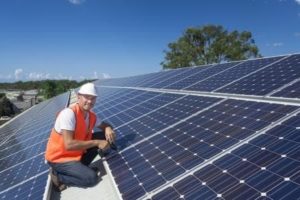
Solar panels are a great way to reduce our dependency on fossil fuels as well as a way to reduce your energy bill.
Solar Panels On Roof Top, Huff Insurance

However, before you install solar panels there are some issues that deserve your consideration.

Businesses are turning to alternative power sources and there are risks associated with these emerging technologies and the exposures they create.

Whether you are installing a solar panel array, leasing space to a contractor installing an array for another customer, or already have an array, it is important to understand the risk exposure.

The top 5 risk exposures from roof mounted Photo Voltaic  (PV) systems are:

  1. The blind spot
  2. Roof loading
  3. Severe weather
  4. Wind
  5. Fire hazards

The blind spot is where a ground fault to the grounded current-carrying conductor occurs undetected.  This then causes a second ground fault in the panel array and the ground fault detector/interrupter can not  de-energize.  This can cause serious electrical shock and a fire.

Roof Loading:  A roof is designed to accommodate a predetermined load; if the road can not support the solar panels, it could lead to structural degradation or collapse over time.

Severe Weather:  The weight of snow or ice on to of the load of the solar panels may be more than anticipated also it could crack the panels’ protective coating, exposing live electrical components.

Wind can cause damage to space below the panels can cause pressurization that cam damage the roof.

Fire:  Whenever you have electrical components exposed to the elements, there is a chance that the components can become worn or deteriorated.  When this happens, there is an increased chance of a fire.  So please have your systems inspected on a regular basis.

Prior to installation of the solar panels, make sure to work with your insurance agent to discuss the risks and how you can minimize or mitigate these risks.

Consider installing the system on another structure or platform, rather than your roof.  If you have to install on the roof, create and maintain clear exits and paths on the roof for maintenance.

Have a professional engineer evaluate the structural integrity and load on the roof to ensure it can not only sustain the solar panel array but also the added weight of a snow load.

Be sure that you hire fully qualified, experienced and insured solar panel contractors and make sure the panels are Underwriters Laboratories approved.

During the installation process make sure of the following: 

  • Have expansion joints are used on all long runs of conduit.
  • Have disconnects for both the DC and AC sides of the panel array.
  • Use correct installation techniques and wire management.
  • Make sure to use additional ground-fault and PV array isolation sensing device
  • Provide sufficient ventilation so air can circulate.
  • Make sure that the panels are installed to minimize wind uplift
  • Make sure that ground protection devices to de-energize the system when there’s a ground fault.

There are a number of challenges associated with installing solar panel arrays on your roof  One is hindering firefighting. Regardless of where the fire breaks out in the building the PV arrays increases the risk of electrocutions, slips and falls and other serious injury.  If the fire is on the roof, the concealed spaces between the panels make it very difficult to have them extinguished.   Also, there is no way to turn off a single PV panel or array.  Solar panels are always live and contact with them with them can cause shock or electrocution.  And in some cases the entire roof can be electrified..

Damage to the solar panels due to weather could cause your business to be interrupted or if a fire is more severe because of the panels it may mean a longer downtime for your business to regain operations.

Some businesses may lease their roof space to contractors to install solar panels for others. Under this situation, there needs to be contracts and agreements in place regarding the following:

  • Who is responsible for the maintenance of the panel
  • Who is insuring the panels
  • Who is responsible, and liable for damages,  if a fire breaks out because of the panels

It is best to make sure that an attorney reviews these contracts and agreements before you sign and enter into them.

Solar panels are a relatively new technology.  So who knows exactly how long the panels will last.  More importantly will the contractor, manufacturer or vendor be around if they fail in a few years. It is very important that you make sure that everyone in the chain of providing these items is reputable and has been in business for a number of years.

Huff Insurance is a full service Independent Insurance Agent We have been dedicated to Protecting Lifestyles™ since 1960. We offer a full array of Personal Insurance, Commercial Insurance and Life Insurance & Health Insurance products. Call us at 410-647-111
Nancy Nicklow, Huff Insurance

A Young Agent’s View of the Insurance Industry

This blog was written by Lisa Miller and describes her experiences in becoming a young insurance agent.

Overwhelming is the best word I can think of to describe my first several months in the insurance industry. It was a tornado of new terms, abbreviations, and acronyms that I had never heard and had no idea what they meant. Similar to realizing you have walked into the wrong college lecture once it is too late to get up and leave, you pretend to know what everyone is talking about and hope someone reveals the answers along the way.

I started in insurance working for an independent agency about 9 months after graduating from college. I was 22, the baby of the office. This job was the first time that I was working with and interacting with people in a professional capacity that were 20, 30, and 40 years my senior. One of the most challenging things to adjust to in my new job was building the confidence to take real ownership of the tasks I was doing. Taking the mental leap from feeling like I was still “sitting at the kids table” to being confident in my abilities, analysis, and actions was difficult. This came from not only day to day experience of working, but also from the infinite amounts of educational resources that were at my fingertips. The learning potential within the insurance industry is in my opinion one of its greatest assets and benefits to people working in the industry. There will never be a point in time that there is nothing left to learn. The constant changes and new developments of both policy and regulations provide a constant need to never stop learning. This is the best way to keep your mind flexible and able to “go with the flow” as things are rapidly changing.

The majority of young people entering the workforce, like myself, have just recently finished school, whether that is college, trade school, or high school. The capacity to learn and absorb new information easily is still high. This ability to switch gears quickly and learn on the go is so beneficial when entering a fast paced workplace, somewhere that you really do learn something new every day. I believe that this really gives an advantage to young people entering the industry. Insurance needs more fast paced, forward thinkers that can change and shape the industry to match the pace of how our world is changing. So many other career fields are packed with innovators and thinkers that are “bright eyed and bushy tailed” about the future of our world and the rapid changes to our daily lives. The insurance industry is notoriously one step behind these changes. Even things that are so seamlessly part of our everyday lives like ride sharing services and smart homes that can be controlled from your cell phone are not so easy to properly protect. Insurance products and regulation need to be developed at the same pace of these new inventions.

One of the top three agency management systems is paper. As in a file cabinet filled with folders on each customer. I truly cannot imagine how working this way could be efficient. Today we all expect instant gratification, whether that’s a YouTube video that loads in .4 seconds, meals prepared and out the window in our car in 3 minutes, or getting an insurance policy issued and paid for and proof of insurance in 15 minutes. There is a huge opportunity here for offices to be completely revolutionized just by going digital. Tech savvy individuals will be able to quickly progress into important roles that can lead companies into the future, and incidentally provide better service to consumers just by being more accessible. Aside from just staying ahead of the game as far as creating new insurance products such as the increasingly popular and necessary cyber liability, there is room for technological advances as well.

There is a huge need for more and more young professionals to enter the insurance industry, and big opportunities in every single facet of the industry for those who have a thirst for knowledge and a desire to be one step ahead. One of the biggest eye openers for me is how diverse the insurance industry is as far as the scope of career options. Of course there are the customer service and sales roles of actually delivering the product to consumers, but it seems like every day I learn of more and more career paths in the industry. People that love numbers can find a home in an actuarial setting, analyzing past data and predicting future trends. Marketers can present insurance to the masses in a way that is easy to understand and help people make informed decisions about their protection. People with legal interest can join claims teams as claim investigators and legal consultants for insurance companies. Graphic designers and web developers can create easy to use websites and systems to be used by both companies and consumers. The number of career paths you can take is endless. The best way to attract new young professionals into the insurance industry is to really showcase and open up all the different options as far as careers within the industry.

Lisa Miller, Young Insurance Agent, Huff Insurance

Do you need insurance for your home based business?

Are Home Based Businesses Properly Covered on a Homeowners Insurance Policy?

Minding your own business is a key task for more than 17 million people in North America. That’s the number of self-employed across the US and Canada.

Increasingly, many of them choose to work from home.  Millions more have outside employment but still have the option of working from home for some or all of the time.

But what many home workers — self-employed or not — don’t realize is that they’re in the middle of a minefield of risks

Often, they’re mistaken in thinking homeowners’ insurance covers them for business risks like liability or property loss, just because they happen to be in their homes. In most cases, it does not.

Or they may not be tuned in to additional risks that flow from their business, like, say libel, malpractice, faulty products, and errors in published material.

Even if you’re not in business for yourself or don’t work from home for someone else, you almost certainly know other people who do, so I thought it might be helpful to jot down some of the key issues.

For Instance:

  1. If you’re employed by someone else, it’s vital to check your insurance protection with them.
  2. If clients (or even the UPS guy) visit you on business, or you hold their property in your home, you may be especially at risk of massive losses either through liability for injuries or property damage.
  3. If you store data about other people or businesses in your home, you may be vulnerable to hacking or other security breaches that could land you with a liability lawsuit.
  4. Your car may not be insured for business use (Check you Auto Insurance)
  5. If you rely on your business as your main source of income, are you protected if you’re suddenly unable to work?

Fortunately, there are several solutions that protect against most of these risks, from riders on existing homeowners’ insurance or renters’ insurance policies through protection for risks associated with specific business activities, to a general all-purpose home business insurance program.

According to the Independent Insurance Agents and Brokers of America, sixty percent of home-based business people are believed to be inadequately insured.  If you’re one of them, or you know someone who is, please get in touch so we can explore what can be done.

For more information on Home Based Business Insurance check out our website .

Huff Insurance is a full service Independent Insurance Agent We have been dedicated to Protecting Lifestyles™ since 1960. We offer a full array of Personal Insurance, Commercial Insurance and Life Insurance & Health Insurance products. Call us at 410-647-111
Nancy Nicklow, Huff Insurance

Important Tips for Hiring Reputable and Reliable Subcontractors for Your Business

Are you looking into hiring a subcontractor for your business?

Sub Contractor Insurance, Huff Insurance, Pasadena MD

There are plenty of advantages with hiring subcontractors for your business. The most important thing to think about is who the individual is and how he or she will represent the company name. When customers complain, they will likely name the company and not the individual subcontractor. In addition to this, the contractor is responsible for everything the subcontractor does. This is why it is so important to hire individuals who are capable, professional and responsible. Many times the customer does not realize that you have hired a subcontractor; so therefore, they think that the subcontractor is you. You want to make sure that the quality of this person’s work, their attitude and ethics are inline with your business.

Before Hiring

Ask yourself if they truly will be a subcontractor. The first thing you need to analyze is if the person you are hiring is truly a subcontractor, or could the be classified as an employee?  You can check out our blog titled
Is Your Subcontractor Truly a Subcontractor? to help you determine this important distinction.

Ask to see proof of insurance. Have the subcontractor’s insurance agent provide a certificate of insurance. If a project will last more than one year, make note of the policy’s expiration date. When that date arrives, ask to see the new certificate of insurance to ensure the subcontractor is keeping the insurance policy active. Make sure the individual is insured for workman’s compensation insurancee and Business Liability Insurance. The subcontractor’s staff should also be properly insured.   Think about how you would handle if your subcontractor is then hiring subcontractors.  Who is responsible to make sure that these subcontractors are also properly insured and licensed?

Verify degree or certification program completion. It is important to hire a subcontractor who has been properly trained. Ask to see a degree or certification. The individual should also have a minimum of four years of experience working as a foreman

Ensure the individual is licensed. Each state has its own rules for licensing and verification, so be sure to use individual state procedures and check local laws. If the subcontractor has additional staff working on the project, they should also be insured. Also; verify that they are properly licensed and that corporations are properly registered with the state and corporations are active.

Ask for references. Ask for a minimum of three current references that can be contacted directly. It is also helpful to ask to see samples of the subcontractor’s previous work. Don’t rely on pictures on their website, may contractors use stock pictures on their website rather than pictures of their actual work.

Make a written contract. This document should include what the contractor expects of the subcontractor and his or her staff. It should include a rate of pay, who will be responsible for mistakes and who is responsible for other various tasks. It is also important to make sure the subcontractor is willing to make repairs or changes after the job is finished.  It is always a good idea to have an attorney design the contract and review any contract that you sign.

Sub Contractor Insurance, Huff Insurance, Pasadena MD

Tour the site together. When doing this, make sure the subcontractor knows what must be done. The subcontractor should also understand how to get the job done and who is in charge of various tasks and the timeline that the work needs to be completed. When the job starts, there should be no guesswork involved.

Make communication a priority. The individual should be easy to contact and talk to. Communication should be good on both ends, so it is important that the subcontractor and contractor get along well.

During A Project

Keep communication lines with customers open. It is important that customers bring their concerns and questions directly to the contractor. Take necessary steps to make the customer feel that his or her input is highly valued. Messages can get lost in the network if they are passed along to the subcontractor and his or her crew, so make sure the customer has all current contact information.

Make a file for subcontractors. Keep track of all conversations and transactions. This includes emails, notes, calls, face-to-face conversations, licenses, certificates and any receipts. Make sure that documentation is done at the time of the conversation, not done at later times.

After Project Completion

Do a final inspection. Walk through the construction site to make sure the job has been completed in a satisfactory manner. Bring a checklist with items that can be marked off as they are verified. Make note of any repairs or changes that must be completed.

Make sure the agreement has been upheld. It is important to make sure all the terms of the contract have been met. Subcontractors’ actions and work should comply with every detail in the agreement. The project is officially over when the terms have been met and the contractor is satisfied.

Are you going to be working with subcontractors there maybe a charge on your insurance coverage for using subcontractors, so please make sure that you contact your trusted choice independent insurance agent.

Huff Insurance is a full service Independent Insurance Agent We have been dedicated to Protecting Lifestyles™ since 1960. We offer a full array of Personal Insurance, Commercial Insurance and Life Insurance & Health Insurance products. Call us at 410-647-111
Nancy Nicklow, Huff Insurance

Preventing Commercial Auto Insurance Claims

How Business Owners Can Mitigate Risks and Prevent Commercial Auto Insurance Claims

The Risks Inherent in Commercial Transportation

Preventing Commercial auto insurance claims | Photo of a commercial dump truck on the roadways driving towards a setting sun.Commercial transportation, a sector crucial to the global economy, is fraught with risks. According to data from the U.S. Department of Transportation, the year 2010 a lone witnessed 112,379 non-fatal crashes involving large trucks and an additional 12,763 non-fatal crashes involving buses. The statistics also recorded a concerning number of injuries and incidents involving hazardous materials. How can you do our part in preventing commercial auto insurance claims?

These numbers reflect a broader issue within the transportation industry, one where safety concerns are perennially at the forefront. However, a silver lining appears in the form of declining fatality and injury rates from 2006 to 2010, suggesting improvements in safety measures and perhaps a benefit from reduced road traffic due to economic challenges. Despite these gains, the rate of accidents involving smaller commercial vehicles like light trucks, sedans, and delivery vans continues to climb, underscoring an ongoing need for enhanced safety protocols.

Delving into the Causes of Commercial Vehicle Accidents

Understanding the root causes of accidents is key to preventig the commercial auto insurance claims. The Department of Transportation’s 2007 truck accident causation study provides valuable insights, pinpointing the most common contributors to these mishaps. Notably, brake problems in trucks emerged as a predominant issue, present in 27 percent of truck vs. car collisions. Other significant factors included interruptions in traffic flow, excessive speed relative to conditions, and drivers’ unfamiliarity with the roadways.

The Department of Transportation published a truck accident causation study in 2007. Their findings: The number one factor associated with truck collisions with cars was brake problems. A brake problem on the truck was found to be present in 27 percent of truck vs. car crashes. Only 2 percent of accidents involved brake problems on the car. The overwhelming majority of brake problems in crashes were on the truck. Therefore, it is very important that all trucks follow maintenance schedules to be sure that these types of claims are prevented.

An interruption in traffic flow was the number two factor, involved in 25 percent of truck-on-car crashes. 15 percent of cases involved traveling too fast for conditions, and 19 percent involved unfamiliarity with the roadway.

10 percent of truck operators involved in these accidents reported feeling under work pressure that may have contributed to the accident. Fatigue only accounted for 7 percent of truck drivers in these accidents (but 15 percent of car drivers.)[i]

Truck drivers were far less likely to have been under the influence of illegal drugs (0.4 percent) or alcohol (0.3 percent) than the drivers of cars in these accidents (7 and 9 percent, respectively.)  Still .4% is too many, in my opinion.

What Causes these Accidents?

The same study also established the top ten “causative factors” for truck accidents. These are factors that were more than just possible factors associated with the crash. These factors were determined to be critical in the accidents studied.

  • Overweight
  • Illegal maneuvers
  • Inadequate surveillance
  • Traveling too fast
  • Inattention
  • Following too closely
  • Misjudging the gap or the other vehicles’ speed
  • External distraction
  • Brake problems

The author of the study, Ralph Craft, recommended the following actions to prevent commercial auto insurance claims:

  • Inspections, compliance reviews and education programs should focus more on thedriver, rather than the vehicle.
  • Fleet owners and managers should develop a formal system for rating drivers.
  • Focus vehicle inspections on brakes, tires and lights.

These three items were found to be the most critical safety systems on large trucks.

This particular study predated the wide use of sophisticated GPS systems. But unfamiliarity with the roads was determined to be a contributing factor in many truck-on-car accidents. Today’s much-improved GPS systems should, in theory, make it easier on truck drivers. It is, for example, theoretically possible today for drivers to conduct a virtual “rehearsal” of the entire route, using GPS technology and maps and aerial photos easily available on the Web.

Comprehensive Strategies to Prevent Commercial Auto Insurance Claims

Armed with this knowledge, business owners can adopt a multi-faceted approach to reducing the likelihood of accidents:

Ensuring Rigorous Vehicle Maintenance

Regular and thorough maintenance checks are crucial. Key focus areas should include brakes, tires, and lights—components directly linked to accident prevention. Implementing a stringent maintenance schedule can dramatically reduce the risk of mechanical failures that lead to accidents.

Fostering a Culture of Safety Among Drivers

Developing formal systems for rating driver performance and conducting comprehensive training programs are essential. Education on safe driving practices and regular compliance reviews can significantly enhance driver preparedness and responsiveness in various driving conditions.

Leveraging Advanced Technology

Today’s GPS systems and other technological tools offer robust features that can prevent accidents. These systems provide real-time traffic updates, sophisticated route planning, and other logistical support that help drivers navigate safely and efficiently.

Understanding the Legal and Financial Stakes

The consequences of commercial vehicle accidents can be dire, with legal and financial repercussions that can cripple a business. Historical data from legal cases involving commercial transportation accidents show that settlements and awards often reach into the millions. For example, severe injuries and wrongful death claims from accidents have led to substantial settlements, highlighting the critical need for adequate insurance coverage.

Navigating Insurance Needs

Business owners must carefully assess their insurance policies to ensure they have sufficient coverage to handle potential claims. This involves not only reviewing the limits of current liability coverage but also considering umbrella policies that provide additional protection. The goal is to shield the business from devastating financial impacts in the event of a major accident.

Proactive Measures to Help Prevent Commercial Auto Insurance Claims

Business owners can take proactive steps to safeguard their operations from the ramifications of commercial vehicle accidents:

  • Risk Assessment: Regularly evaluate the potential risks associated with commercial transportation and update safety protocols accordingly.
  • Employee Engagement: Engage with employees about the importance of safety, ensuring that it becomes a core part of the company culture.
  • Policy Updates: Continuously update policies and procedures to reflect the latest safety standards and regulatory requirements.
  • Incident Reviews: Conduct thorough reviews of any incidents to identify underlying issues and prevent recurrence.

Conclusion

Preventing commercial auto insurance claims goes beyond mere compliance with safety regulations; it involves a holistic approach to risk management, encompassing rigorous maintenance, comprehensive driver training, strategic use of technology, and robust insurance coverage. By implementing these strategies, business owners not only protect their assets but also contribute to the overall safety of the roadways.

Business owners interested in enhancing their safety protocols and insurance solutions can rely on Huff Insurance, a trusted provider dedicated to Protecting Lifestyles™ since 1960. For expert guidance and comprehensive insurance options, contact Huff Insurance at 410-647-1111.