
Who Pays For Removal Of A Fallen Tree?
Who Pays for Tree Removal? Understanding Homeowners Insurance Coverage
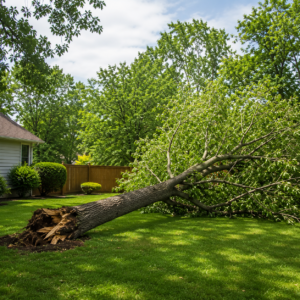 When a tree falls on your property, cleanup is often one of the first concerns. Many homeowners assume their insurance company automatically pays for tree removal of any fallen tree, but that’s not always the case. Whether your homeowners insurance helps depends on why the tree fell, what it damaged, and where it landed.
While insurance companies may customize their policies, many homeowners policies are based on the standard ISO HO-3 form. That policy provides a helpful starting point for understanding how tree removal coverage generally works. Individual insurance companies may broaden or restrict coverage, so it’s always important to review your own policy.
When Does Homeowners Insurance Pay for Tree Removal?
In most cases, homeowners insurance covers tree removal only when a covered event, such as wind, lightning, or another insured peril, causes the tree to fall and certain conditions are met.
Coverage is commonly available when:
- The tree damages your home or another covered structure.
- The tree blocks access to your home, such as your driveway or accessibility ramp.
- The policy’s tree removal provisions apply, subject to the policy’s limits.
If a tree simply falls in your yard without causing damage or blocking access, insurance generally does not pay for its removal.
Tree Falls and Damages Your Home
If a storm causes a tree to fall onto your house, detached garage, fence, or another covered structure, your homeowners insurance will typically pay for the repairs, assuming the cause of the loss is covered under your policy.
The policy generally also pays the reasonable cost of removing the tree from the damaged structure so repairs can begin. This is because removing the tree is necessary to repair the covered damage.
Many standard homeowners policies also include separate limits for removing the tree debris from the property. Under the traditional ISO homeowners policy, those limits are typically $500 per tree, with a maximum of $1,000 per loss. Some insurance companies increase these limits or include enhanced debris removal coverage as part of broader policy packages.
What If the Tree Came From Your Neighbor’s Property?
Many people believe the owner of the tree is automatically responsible for the damage. In reality, that’s usually not how homeowners insurance works.
If your neighbor’s healthy tree falls during a windstorm and damages your home, your homeowners insurance normally covers your loss. Ownership of the tree is generally not the deciding factor.
However, if the tree was obviously dead or hazardous and the neighbor knew about the problem but failed to address it, negligence could become an issue. In those situations, your insurance company may seek reimbursement from the neighbor or their insurance company after your claim is paid.
Tree Falls but Doesn’t Damage Anything
Not every fallen tree results in an insurance claim.
If a storm blows a tree into your yard and it doesn’t strike your home, garage, fence, or another covered structure, homeowners insurance typically will not pay to remove it.
Although the storm itself may be a covered event, insurance is designed to pay for covered property damage. If there is no covered damage, the cost of removing the tree usually becomes the homeowner’s responsibility.
Some policies may offer a small about ov coverage of $500 per tree. It varies by company and by state,
Tree Blocks Access to Your Property
There is one important exception that surprises many homeowners.
The standard ISO homeowners policy provides limited tree removal coverage when a covered peril causes a tree to block your driveway, preventing a registered vehicle from entering or leaving your residence. Coverage may also apply if a fallen tree blocks an accessibility ramp used by a person with disabilities.
These situations are generally subject to the same special tree removal limits found elsewhere in the policy.
What About Dead or Diseased Trees?
Homeowners insurance is intended to cover sudden and accidental losses rather than routine maintenance.
If a tree falls because it has been neglected, is dead, or has deteriorated over time, coverage may be limited or denied depending on the circumstances. Regular inspections and maintenance of trees on your property can help reduce both safety risks and the chance of an uncovered loss.
Can You Buy More Tree Removal Coverage?
Yes. While the ISO homeowners policy establishes a common foundation, many insurance companies offer broader protection.
Depending on the insurer, you may find:
- Higher tree removal limits
- Expanded debris removal coverage
- Increased limits following major storms
- Enhanced homeowners packages that automatically include additional benefits
- Optional endorsements that broaden certain property coverages
Because every insurance company designs its policies differently, it’s worth reviewing your coverage periodically to see whether enhanced options are available.
Frequently Asked Questions About Tree Removal
Does homeowners insurance pay to remove every fallen tree?
No. Coverage generally applies only when the tree falls because of a covered cause of loss and either damages covered property or blocks access in a way recognized by the policy. A tree that falls harmlessly in your yard is usually your responsibility.
Does it matter whose tree it was?
Usually not. Your homeowners insurance typically covers damage to your property regardless of where the tree originated. Questions about ownership generally become important only if negligence is involved.
Is there a deductible for tree removal?
If the tree removal is part of a covered homeowners insurance claim, your policy deductible will usually apply unless your policy provides otherwise.
Does homeowners insurance cover stump removal?
Not necessarily. Standard policies generally focus on removing the fallen tree after a covered loss. Stump grinding or complete stump removal is often considered a separate expense unless specifically included by your insurance company.
Should I remove the tree before filing a claim?
If the tree creates an immediate safety hazard, take reasonable steps to protect your property. Whenever possible, photograph the damage before cleanup begins and contact your insurance company before authorizing major removal work.
Contact Huff Insurance
Understanding homeowners insurance isn’t always easy, especially after a storm. Since 1960, Huff Insurance has helped Maryland homeowners understand what their policies cover before they need to file a claim.
As an independent insurance agency, we work with multiple insurance companies rather than representing just one. That allows us to compare coverage options, explain important differences in policy limits, and help you find protection that fits your needs.
If you’d like to review your homeowners insurance or compare coverage from several leading insurers, the team at Huff Insurance is ready to help.
About The Author: Jerry Nicklow
Jerry Nicklow has worked with Huff Insuranc since 2008 and has been in the insurance industry since 1995. Jerry has written insurance marketing and educational content since joiniung Huff Insurance. He holds the API, AAI, and AIS designations from the Insurance Institutes. He has also appeared on insurance industry podcasts, like The Insurance Guys Podcast , Agency Intelligence Podcasts, and multiple insurance carrier podcasts. Jerry is also the creator of Real Insurance Talk, where he explains insurance in plain terms through articles and his YouTube channel to help individuals and business owners better understand coverage and risk.