Protecting Lifestyles

Protect Your Assets And Income
From Disasters And Lawsuits!

Request a Quote

How to Keep Family Members & Visitors Safe in the Pool

Many children drown or are injured in residential pools every year. By implementing a good set of safety rules, parents can help keep their kids and visitors safe. Some people may think it sounds rude to lay down a list of rules in front of pool guests, but the cost of a liability lawsuit would be much worse. To avoid sounding like a stickler, simply explain to pool guests that their safety is important. Explain that they can help out by following the safety rules. Parents should review these rules with children frequently. Quiz them on each point to ensure they understand thoroughly. The following tips are helpful for developing a strong set of pool and spa safety rules.

1. Specify all requirements. This should be the most important step. Decide who can go in the pool and at what time. For example, children should have specific blocks of time when they are allowed in the pool, and they should not be allowed to go in when an adult is not present. Teach them it is dangerous to run. Instead of just telling them not to run, explain how they can slip, fall into the pool and possibly drown. Discourage horseplay or rough water games. Children who cannot get along in the pool should understand that there will be consequences. Kids should also understand how important it is to stay away from drains and filters.

2. Have an emergency plan. Even if strict rules are set in place, pool accidents may still happen. It is important to know what to do. Make sure a cordless phone is always near the pool. If an accident happens, it will be easier for someone to call 911. Adults should learn how to perform CPR. The Red Cross offers low-cost classes, and some hospitals or health clinics offer free classes. Make sure kids know how to dial 911, and they should know what address to tell emergency response teams to locate.

3. Teach kids how to swim. Although toddlers may not be up for actual swimming lessons, it is good to put them in the water with floating pool toys. Do not leave them alone, but let them get accustomed to the water. When children are old enough for swimming lessons, enroll them in beginner courses. Let them continue until they complete all of the courses. Adults who have never taken swimming lessons should also learn how to swim. As a backup, it is helpful to have a life-saving floating raft attached to a rope or pole.

4. Keep the pool area safe. When the pool is not in use, make sure it is covered. Purchase a pool cover manufactured by professionals. Never use a tarp. Some nets work well as pool covers, but they become weathered over time, so be sure to replace them every few years. Nets may also be easy for some children to remove. The optimal choice is a durable hard cover with a locking mechanism. Make sure there is a fence around the pool or yard. The fence should stand at least four feet high. If a house is used as a fourth side to enclose a pool, install door alarms. This will alert parents when kids enter the pool area. It is also helpful to install underwater alarms or surface wave alarms. If parents do not deactivate these alarms, they will go off when kids enter the pool.

If a child is missing, be sure to check the pool first. This is a thought that no parent wants to dwell on, but it is best to rule out that possibility first. Parents should always carefully watch kids who are playing in the pool. Accidents can happen in a second, and children can start drowning in less than a minute. Check drain covers frequently, and make sure they are compliant with current regulations. A pool service company will be able to provide information about current drain cover specifications. Remember to keep any gates to the pool area locked. Homeowners may be liable for uninvited people who wander into an unlocked pool area and get injured.


Don’t Let Obsolete Driving Techniques Put You in Harm’s Way

It can be hard to hear your kids call your beloved television show reruns, choice of music, hairstyle, and/or clothes old school, but you’ll have to remember that you probably didn’t exactly jive with your parent’s choices either. While Elvis’s Rubbernecking may forever play in your head and never become dated in your eyes, you should realize that your driving techniques may be one dated area truly in need of an update. The advances made to automotive technology and in safety research have likely made most of what you learned as a new driver not only dated, but dangerous.

Here are six tips to bring your driving skills up-to-date and avoid jeopardizing your safety, as well as those around you.

1. Seat position – airbags have made seat positioning an important safety issue for drivers and passengers. When airbags were first placed in vehicles, they caused some serious injuries to drivers seated too close during a deployment. Even modern de-powered airbags can deploy at 150 mph and cause serious injuries if the driver isn’t seated at a safe distance. Position your seat 10-12 inches from the steering wheel.

2. Hand position – you probably learned to keep your hands palm-side down at 10 o’clock and 2 o’clock as you grip the steering wheel. Today, it’s recommended that your left hand be at 8 o’clock and your right hand be at 4 o’clock to help prevent your arms from tiring during prolonged driving. It’s also recommended to place your thumbs atop the steering wheel and wrap your fingers underneath the wheel.

3. Wheel turns – you probably learned the hand-over-hand method of turning the steering wheel. It’s now recommended to use a push-pull-slide method where one hand pushes the wheel up as the other hand pulls it down. Neither forearm will cross the steering wheel hub, and neither hand will leave the steering wheel. The upward pushing hand continues to push as it slides back to it’s original positioning. Meanwhile, the other hand is sliding back as it continues to pull. The driving technique is aimed at reducing the risk of hitting yourself in the face if your airbag were to deploy.


4. Normal breaking – it’s been discovered that you have the greatest control over breaking when you keep your heel on the floorboard and normally break with the toes. Ensure that you judge stopping distances accurately in order to use the same degree of braking pressure from the time you first break until the vehicle actually comes to a complete stop.

5. Breaking on slick surfaces – leave the transmission in drive and remove your foot from the accelerator if you’re breaking on a slick surface area. The drag of engine compression will help the vehicle to slow down quicker.

6. Emergency breaking – anti-lock breaking systems, or ABS, mean that you no longer need to pump the breaks. During emergency breaking, just maintain a firm, steady pressure on the brake pedal. Remember to steer in the direction you need the vehicle to go.


Blog by Nancy Nicklow from Huff Insurance in Pasadena Maryland

Will Your Business Property Insurance and General Liability Insurance cover all of Your risks?

If you are a business owner I wanted to alert you to a risk you may be facing but may not discover until it’s too late.

Blog by Nancy Nicklow of Huff InsuranceWhen it comes to business insurance, many business owners make one of two mistakes: 1) They believe property and general liability insurance will cover all the risks they face; or 2) they’re aware of other dangers but don’t think they can be protected against with insurance.

In most cases, they’re wrong on either count.

Scores of additional hazards may threaten a business, while almost every conceivable risk can be protected with insurance — if you know where to get it.

The principle categories of business insurance are:

  • General liability — for accidents and negligence claims that cause bodily injury or property damage.
  • Product liability — for defective or unsafe products you make or sell.
  • Professional liability, sometimes known as errors and omissions — for claims alleging malpractice or mistakes.
  • Business Property Insurance — for damage to your buildings caused by a wide range of hazards.
  • Employee benefits including health, life and disability.
  • Business Auto Insurance and Equipment Insurance.

The trouble is that the way insurers define these groups, and the range of perils they cover, varies hugely.

For instance, some commercial property insurance protects against loss of income or business interruption, some don’t. Others may exclude particular perils — flood damage being one of the most common.

And certain policies will only protect you against storm or quake damage if you provide evidence of structural reinforcement.

Some vehicle insurance policies cover employee usage of their own autos on company business. Others don’t.

Some insurance coverage can be combined into a single plan called a Business Owners Policy (BOP) but, again, this doesn’t cover everything.

There are many types of additional protection you can secure, either as a separate policy or as an endorsement to an existing one — for example  Special Event Liability InsurancePollution Liability Insurance, loss of key personnel, Cyber Liability Insurance / Data Breach Insurance, and risks specific to your particular type of business.

The other factor where owners sometimes fall down is in estimating the amount of coverage they need.

It’s not uncommon to read about incidents where insurance policy limits turned out to be totally inadequate for meeting the cost of lawsuits. Business owners simply thought they were getting a great bargain when they bought the policies at cheap prices.

Believe me, I’m not trying to scare you. I just wanted to get you thinking about the various risks your business faces today and in the future.

For instance,  your firm may have changed significantly since you started out. Some risks fade, new ones arise.

It would probably be a good idea to take time each year to review your existing coverage with your insurance agent. This meeting is just as important as your annual meeting with your accountant or attorney and is to make sure you’re properly protected.


Good Housekeeping Is Safety Job One

 Cleaning up is usually not a task many people enjoy.  Whether it’s washing the dishes after a big meal or scrubbing the shower, most people would rather put off until tomorrow what they should be doing today.


The same is true for housekeeping at work.  Employees get involved in the day-to-day routine, always intending to clean up but never quite doing it.  Sometimes, they make a half-hearted attempt at sweeping aside some paper, but it doesn’t attack the real problem.  That’s because the problem with poor on-site housekeeping goes beyond just hygiene.  Lack of regular housekeeping can actually be the catalyst for injury.

Employers should establish a routine housekeeping program and designate someone to administer it and to ensure employees follow it consistently.  If a housekeeping program is going to be truly effective, management must show they have enough commitment to the program to formalize it and have a designated overseer.

This kind of strict adherence to good housekeeping practices will lower your company’s accident rates, which in turn lowers costs for medical claims and workers’ compensation.  Fewer injuries occur when there is sufficient work area for employees to move freely while doing their jobs.  Fewer injuries can also lead to increased production.  When work areas are hazard-free and supplies and equipment are orderly, workers can perform their jobs more efficiently with little down time spent looking for what they need.

A clean workplace also helps workers think more clearly. If employees know they will be able to access what they need to perform their jobs, a major source of stress in the workplace is eliminated. Work becomes less like “work” and much more enjoyable. As employees find themselves less burdened with concerns about being physically able to get the job done, it boosts their morale, in turn increasing production and quality of their output.

What should you include in your on-site housekeeping program? The California State Compensation Insurance Fund recommends the following:

• Neatly arrange small parts, tools, cords, hoses, and equipment

• Close drawers and cabinet doors when not in use

• Store materials and supplies away from edges and at a stable height

• Clean up liquid spills and tracked in water, mud, and snow, which could cause a slip and fall

• Properly store or dispose of oily rags or flammable liquids

• Put scraps or debris in available trash containers

• Keep aisles, walkways, platforms, and stairways clean, clear, and dry

• Insure easy access to fire extinguishers, safety equipment, and emergency exits

The most important lesson to teach employees is that following good housekeeping practices is an ongoing process that every worker should adhere to each and every day.  Once good housekeeping practices become a part of your workplace culture, it will take less time and effort to follow them because they will be second nature to your employees.

Huff Insurance is a full service Independent Insurance Agent We have been dedicated to Protecting Lifestyles™ since 1960. We offer a full array of Personal Insurance, Commercial Insurance and Life Insurance & Health Insurance products. Call us at 410-647-111

Things to do when you are named an executor of an estate.

My relative has passed away and named me executor of their estate, What do I do Now?

Things to consider now that you are an executor of an estate

Losing a love one can be very emotional time in one’s life.  At Huff Insurance we are sorry for your recent loss.  I know, I have lost both of my parents and handled my mom’s estate.  At some points I was not sure what to do next or where to even turn.  The first thing that I would recommend is that you hire an attorney to help you through the process.  As the executor of an estate, their information can be very valuable to you.  The attorney will help you to make sure that deadlines for reports and taxes are not missed.

Being the personal representative for an estate is not an easy task.

Once you are named the personal representative, Maryland law states that you are “…under general duty to settle and distribute the estate of the decedent in accordance with the terms of the will and the estates of decedents law as expeditiously and with little sacrifice of value as is reasonable under the circumstances.”

You will need to take possession of and distribute assets, prepare and file and inventory and information reports, prepare and filing an accounting, pay debts, taxes and costs of administration and fulfill all other responsibilities.

Most times, a probate bond will need to be filed with the county register of wills office.  The estate bond is in place in case the taxes are not paid.  The state can make a claim against the bonding company for the amount due.   The bonding company would then proceed with legal action against the personal representative or executor of the estate.

Insurance Concerns for an Executor of an Estate

The time of loss is not the time that anyone wants to think about insurance.  However, as the executor of the estate, you need to do it know before there is a claim.   Family members may not be happy if the family home burns to the grown and there is no home insurance coverage.

There could also be issues with the auto insurance policy.  If a family member drives the deceased car and has a serious accident,  the estate can be sued,  As the executor of the estate, it is your obligation to make sure that all properties, vehicles, assets are properly insured.

Your loved one may have a residence that they owned and occupied.  Most homeowner’s insurance policies require that the named insured reside in the premises.  Now that the owner has passed away, you need to let the insurance company know.

Failure to notify the insurance company could jeopardize all of the coverage afforded by the policy.   Make sure that you document when and with whom you spoke with at the agent or the insurance company.

How is Property Titled?

You should also know how the property is titled.  Many times it is titled joint tenants with right of survivorship.  If the other spouse still resides in the home it may be as simple as just correcting the named insured on the policy.   The entire policy may need to be rewritten if there is no surviving spouse.  Or if the surviving spouse has decided to go live with family or to be in a nursing home.

Maybe other family members or even lifelong friends are going to stay at the property.  The insurance company still needs to be made aware.  Depending on the situation you may need a dwelling fire policy.  Also, the friends should get their own renters insurance policy to cover their personal liability coverage and their belongings if there would be a claim.

There may be a vehicle that was titled to the deceased. 

  • Where is that vehicle going to be kept? Many times the personal representative may decide to keep the vehicle at their home, which may be an issue if there is a claim and the company was not notified of the change in location.
  • Are there additional drivers that will be using the vehicle before the titling of the vehicle is changed?  If so, then the auto insurance company needs to be made aware of these drivers.  Anyone who is driving the vehicle or has regular access to it needs to be listed on the car insurance policy.

A lot of responsibility comes with being the executor of an estate.

Here is a quick reference of the things to do after the burial of your love one. 

Huff Insurance, Probate Bond, Executor of an estate, Pasadena, MD

  • Contact the Social Security Administration and or any other government agency or benefit program that may be making payments to the decedent.
  • Review the Decedents financial affairs and look for any estate planning documents such as Wills and Trusts.
  • Consult with an attorney about these documents and other estate matters
  • Consult with an accountant if there will need to be final accounting completed
  • If a Probate Bond is needed, contact Huff Insurance
  • Open a bank account for the estate of the Decedent.
  • Cancel all unnecessary services- such as cable TV,  phone or newspaper  subscriptions
  • If there is life insurance in place contact the companies about filing a claim
  • Contact the insurance company or agent for the home, auto, business or any other insurance policies that are in effect to see what changes need to be made. Maintain all coverage on all properties.
  • Make an inventory of household goods, personal belonging and the like. This is so they can be accounted for and properly distributed
  • Try to assemble the deeds of the decedent to see what real estate, if any is owned. If there is real estate in other states, you may need to file probate in those states as well.
  • IRAs, retirement plans, may involve beneficiaries.
  • Do not be quick to distribute assets to family members.  There maybe taxes due that need to be paid before they can be distributed

Huff Insurance is a full service Independent Insurance Agent We have been dedicated to Protecting Lifestyles™ since 1960. We offer a full array of Personal Insurance, Commercial Insurance and Life Insurance products.

Call us at 410-647-111 and we can help you with the insurance aspect of being an executor of an estate.

Huff Insurance, Pasadena, MD

Are mp3 Players a Safety Hazard at Work?

“Music hath charms to soothe the savage breast.” At least so thought William Congreve, a 17th century English playwright. However, the music Congreve was referring to didn’t come out of technological concoctions such as the mp3 player. Had he been alive today, he might be less concerned with the effects of the music and a lot more concerned with the effects of using this technology, especially on the job.

The mp3 player is fast becoming the method of choice for employees who need their daily dosage of tunes during the workday. While it can be argued that usage of personal music players in the office help employees concentrate by letting them tune out extraneous noise, it should be noted that any productivity gain comes with a price.

The first safety hazard associated with repeated mp3 player use is a condition that results from the hand movements necessary to navigate through a playlist. The British Chiropractic Association has called the movement “unnatural,” stating it separates the joint in the thumb every time the action is performed. The ultimate result of repeating this movement too often is a Repetitive Stress Injury (RSI). In addition to RSI, the prolonged gripping of the device, the repetitive pushing of the small buttons and the awkward wrist movements can lead to carpal tunnel syndrome and tendonitis. As the devices become even smaller with each succeeding product generation, the risk for these conditions will become more prevalent. And as every employer knows, an employee with carpal tunnel syndrome or tendonitis is not only unproductive, but prone to racking up large medical claims.

The potential for hearing-related problems connected with mp3 player use is another source of alarm. Digital technology permits users to listen to thousands of consecutive hours of music. Older technologies either required users to turn over a cassette or contained only an hour or so of stored music. Either way, the ears had a brief respite from the sound. Also, the higher-quality sound of new music players makes it easier for users to turn up the volume to dangerous levels. High-volume levels can result in tinnitus, a condition in which the sufferer hears continuous buzzing in the ears.

Many tinnitus sufferers complain of buzzing, whooshing, chirping, hissing, ocean waves and even music in their ears. Some people only experience tinnitus occasionally, while others experience it 24 hours a day. The problem is associated with the sensorineural system, which transmits signals from the inner ear to the brain. An employee suffering from tinnitus is not going to exhibit increased levels of concentration.

As if this weren’t enough, employees walking around with earphones not only block out extraneous noise, but everything else, including warnings of imminent danger such as a fire alarm. This puts them at increased risk for personal injury.

For these reasons employers who permit the use of mp3 player or other personal music players in the workplace should establish guidelines concerning the length of time an employee can listen and in what areas mp3 player use is permitted.

Grilling Safety Tips from Huff Insurance in Pasadena Maryland

Grilling Safety and Fireworks Safety for 4th of July Weekend!

Happy Birthday America!

4th of July, Huff Insurance, Pasadena MarylandIt’s Summertime. Now that it’s just about that time for one of my favorite holidays, the Fourth of July! What’s better than fireworks a great BBQ cookout on the Fourth? Nothing. The weather, the food, pools, boats, swimming, and of course fireworks… you can’t beat it! As much fun as much fun as all the activities on Independence Day are, you have to keep in mind; you’re literally playing with fire all day. So, at the top of your mind needs to be grilling safety and fireworks safety
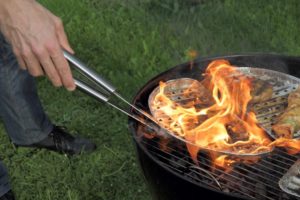

Each year many Americans unfortunately find that out the hard way, suffering damage to their homes and even some serious injuries to themselves using grills and fireworks.

Grilling is a great, fun way to cook and spend time with friends, but is best when safe. You can prevent grilling accidents by just taking a few simple precautions.

Grilling Safety Tips

  • Your grill should be on a level surface away from anything that could be ignited by the flames (bushes, fences, etc.)
  • Use long utensils and dress appropriately.
  • NEVER use a grill indoors
  • Keep your grill clean and well-maintained. Check parts regularly and clean grates after each use.
  • Never leave a hot grill unattended or let children play near it.

Charcoal Grilling Safety from Huff Insurance, Pasadena Maryland
Charcoal Grills

  • Do not add lighter fluid directly on coals, and never use gasoline or kerosene.
  • To dispose of coals, allow the ashes to cool for at least 48 hours before disposal in a non-combustible container. If you cannot wait 48 hours, carefully place coals individually in a can of sand or bucket of water.

Gas Grilling Safety, Huff Insurance, Pasadena MarylandGas Grills

  • Check grill hoses for leaks each year- apply a light soap and water solution to the hose. A propane leak will release bubbles. If you have a leak, and it will not stop after the grill and gas is turned off, call the fire department. Even if the leak stops when the grill and gas are turned off, have your grill serviced by a professional.
  • If you smell gas while cooking, immediately get away from the grill and call the fire department. Do not move the grill.
  • Do not keep a filled propane tank in a hot car or trunk. When getting containers refilled, make that your last stop before going home.
  • Store propane tanks in an upright position, and never indoors.

Source: Kingsford.com

What’s more American then lighting off fireworks when the sun goes down on July 4th?

Follow these simple precautions to ensure your fireworks extravaganza will be the safest on the block.

Fireworks Safety Tips
Fireworks Safety, Huff Insurance

  • Do not use alcohol with fireworks.
  • Never let children handle, play with or light any fireworks.  Only adults should handle and light the fireworks.
  • Follow your local and state laws regarding the possession and use of fireworks, and use good common sense.
  • Always light fireworks on a hard, flat and level surface to insure the stability of the products.
  • Use the fireworks in a clear, open space away from buildings and vehicles, making sure the overhead area is free from obstructions.
  • Never put your head or any part of your body over the top of any fireworks.  Do not look into a tube to check on the firework.  And never hold an ignited firework in your hand.
  • Use care when lighting the fireworks.
  • Light only one firework at a time.
  • Never attempt to re-light, alter or fix any “dud” fireworks.
  • Always have a readily accessible fire extinguisher, water supply, hose or bucket of water near your launch site for emergencies.  A connected hose is the best water source.
  • Never aim, point or throw any fireworks at another person or at property.
  • Only use fireworks outdoors.
  • Be careful using fireworks around animals.
  • Buy fireworks only from reliable, licensed fireworks dealers.
  • Always store fireworks in a cool, dry place; and dispose of fireworks properly.

Source: Phantom Fireworks

The Fourth of July is one of my favorite holidays, and hopefully it’s one of yours as well. We just want to ensure you have the safest and best Fourth of July celebration!

So please take precautions when it comes to Grilling Safety and Fireworks Safety.  The last thing you want to do is to spend your evening in the hospital instead of watching the fireworks.

This is also a great time to review your insurance to make sure you have adequate Home Insurance and even an Umbrella Insurance policy.  Believe me, if someone gets hurt at your party, they will be looking for someone to pay the bills.

On behalf of all of us at Huff Insurance, have a happy Fourth of July, and a great rest of your summer!


Online Insurance as Opposed to an Insurance Agency: What’s the Difference?

Just as one may use a CPA to prepare their income taxes or an attorney to help them with their estate planning, many choose to use a Trusted Choice Independent Insurance Agency to write their insurance policies. This choice is mainly made because a person feels they need professional advice during the process. Of course, everyone will have different needs and circumstances surrounding their purchase, and this is why an insurance professional’s advice can be an invaluable asset.

If you’re debating buying insurance on-line versus through insurance agency, then you should ask yourself a couple of questions:

* Do I know for certain what specific coverage(s) I need?
* Do I know all the questions I should be asking before making an insurance purchase?
* Will the on-line purchase truly result in both time and money savings?
* Can I obtain all my insurance policies through a single on-line insurance provider?
* Can I call the on-line insurance provider and receive personalized insurance advice?
* Is the personal information I’ll be providing kept secure?

You want to know exactly what insurance coverage you need and that the insurance you’re purchasing meets those needs adequately. Insurance can vary greatly from state to state, meaning that it’s equally important for your insurance source to be knowledgeable. You certainly don’t want to purchase an insurance policy and discover down the road that it doesn’t protect you during a claim. Making an insurance purchase with an on-line company that fails to connect professional insurance advice to your personal insurance needs can leave you at risk of being without the coverage you need. You shouldn’t be the only one taking time to ask questions. The on-line insurance company must ask you questions in order to ensure they’re recommending the appropriate coverage(s).

One of the best ways to determine if you’re really saving money by purchasing your insurance on-line is to get a quote of your policy on-line. Do keep in mind that most on-line companies don’t offer multi-policy discounts, such as for home and auto. This is because most offer homeowner’s insurance through a different company, if at all. On the other hand, an Independent Insurance Agency typically allows you to select coverage from several different insurance companies and can help you determine which company will offer you the most favorable rates for your particular risk type. Another consideration is that insurance agencies typically have a much more stringent screening process in relation to these insurance companies.

Unlike insurance agencies, many on-line companies will either not have the services that you need readily available or have a system that you must sign into and learn to navigate before being able to obtain what you need. One such example would be obtaining insurance documents, such as a certificate of insurance. Let’s say you’re using your vehicle to take your child and some of his/her classmates on a field trip. You learn the day of the trip that you must have evidence of your insurance before going. If you use an insurance agency, the documented can be faxed or emailed to the school or your smart phone with a quick and simple call. A second example would be how an insurance agency can help you meet some very challenging needs associated with needing a hard to place insurance policy. Despite the trend for on-line shopping, insurance agencies continue to thrive because of the solid reputations they build from customer satisfaction.

Insurance is often required – auto insurance by your state, homeowner’s insurance by your mortgage lender, or even coverage(s) an owner of a space you’re trying to rent for a professional or personal function may require of you. Such requirements can often be like trying to understand the tax code. If you use an insurance agency, then you can email or fax any insurance requirements to your insurance agent for quick and efficient resolution.

Carefully consider how you go about purchasing your insurance. Surprises are the last things you want when it comes to the vital protection of insurance. If you have any uncertainty about what you’re really getting with on-line insurance, then you might want to rethink your decision. If you’d like to avoid the one-size-fits-all approach of on-line insurance and receive the knowledge and expertise of an insurance agent, then you may consider opting for a professional, independent agent to prepare your insurance policy.

We know you see the commercials like “Save 15% in 15 minutes” and  “Why take 15 minutes when you can do it in 7 1/2”.  But the commercial you should be concerned about if you are involved in a claim and are found liable is “If you have a phone, you have a lawyer.”  Because those lawyers are going to try to get the most money out of you for the settlements for their client.  And if you you have the cut rate online insurance policies, you could be risking your home and your future earnings.


Tips to Prevent Sprains and Strains At Work

Tips to Avoid a Workplace Injury Due to Lifting or Pushing Objects

Many jobs require lifting and pushing in one form or another as part of the routine job description. Employees that frequently lift or push objects need to be aware that lifting, pushing, and over reaching can cause strains and sprains. Such injuries typically affect the back, arms, and shoulders and are caused by improper handling techniques. If your job requires you to push, pull or lift during the day, make sure you know how to perform these activities properly.

The first issue to keep in mind is that most strains and sprains happen because people lift objects that weigh too much. Before lifting anything, size up the load to determine if you have the physical strength to lift without straining. If you don’t possess the physical capability, you can either break it down into smaller loads, if applicable, or seek help from a co-worker. If you use carts or hand trucks, be sure they are in good operating condition. These devices can put additional strain on your back if they don’t work correctly or if you overload them.

If it is within your physical capability to lift the load, then be sure that you use the correct procedure. Stand close to the object. Then squat down and bend your knees, not your back. Grip the object firmly and lift slowly. As you lift, straighten your legs until you are standing erect. Carry the load close to your body near your waist. Never lift the object above your shoulders. If you have to turn while lifting, point your feet in the direction you’ll be heading; don’t twist your back.

If you must push or pull a load, bend your knees and use your legs and the weight of your body to move it. Take small steps and keep your stomach muscles tightened. You should lean slightly into the load if you are pushing, and lean slightly out if pulling. Note that it’s always better for your body if you can push rather than pull an object.

Repeatedly lifting heavy objects is the most common cause of strains and sprains. However, injuries can also happen as a result of lifting moderate loads in awkward positions or remaining in a bent-over or twisted position for long periods of time. Remember, the further the load is from your body, the greater strain placed on your back. You should always attempt to position any load you are carrying at waist level. Keep your body as close to the work area as is safely possible. And most importantly, never overestimate your physical ability to lift or carry an object.

And should you be unfortunate enough to suffer a workplace injury, make sure you immediately report it to your immediate supervisor.  You do not want any issues when dealing with a Workers Compensation Insurance  Claim.

Are Your Valuable Collectibles and Antiques Adequately Protected?

Antique Jewelry Insurance, Huff Insurance, Pasadena, MDMany Americans have a passion for collecting antiquities, while others may simple inherit some valuable antiques from their relatives. Either way, these antiques are often not adequately protected under a typical homeowner’s insurance policy. Being inadequately insured could mean significant financial and emotional loss if something were to happen to one of your antiques.

As far as antiques go, a standard homeowner’s insurance policy may very likely include restrictive coverage and limits and have a valuation only on the actual cash value. Before you mistakenly assume that adding a personal property replacement cost endorsement to your homeowner’s insurance policy will provide you with coverage, you should realize that the endorsement lists several ineligible properties, including antiques, paintings, art, and memorabilia. There are also several coverage restrictions, such as excluding coverage if the antique is accidentally scratched or broken.

Here are six tips that may help you better protect your valuable antiques and collectibles:

1. Make an inventory of all your antiques and otherwise valuable collectibles. Take pictures and videos of each item, making sure to capture the item from all angles.

2. Ensure that your antiques and collectibles are appropriately stored and adequately secured.

3. For items of a lesser value, a general value assessment can be obtained for free online if you have a good photo and description for the antique or fine art dealer. For extensive or high-value collections, you certainly need to consider contacting an experienced antique appraiser. Most appraisers will need to inspect high-value pieces in person. The appraisal should include the replacement value, auction value, a description, and any comments the appraiser has about the item. Of course, this will most often involve a fee-for-service. Make sure the appraisal is done as per the requirements and codes of the American Appraisers Association -and- American Society of Appraisers.

4. Common, less valuable objects can usually be valuated online with the use of internet auction sites like eBay. This can give you a good market value for an item. Make sure you note both the asking and closing price of the item, but remember that the closing price will give you the best idea of the true value of the item.

5. Schedule an appointment with Huff Insurance to determine if your existing coverage adequately covers and protects your antiques and collectibles, and, if not, what coverages you may need. Be sure to bring your inventory, photos and videos, and appraisals to the appointment.

6. Ask Huff Insurance about a personal inland marine policy, Jewelry Insurance Policy, or endorsement, which can be added to your existing homeowner’s insurance policy to schedule your items on an agreed value based on the item’s appraisal. Although the above may also contain an exclusion for breakage, the exclusion can usually be eliminated for an extra cost.