Protecting Lifestyles

Protect Your Assets And Income
From Disasters And Lawsuits!

Request a Quote

How to Avoid Libel on Social Media Sites

Can Social Media Get You Sued?

Huff Insurance
Huff InsuranceWhen using social media sites, it is easy to get carried away with expressing disgust or irritation. Everyone is entitled to their own opinion, but it is important to avoid libel. The first step in avoiding it is to know the definition. Libel is any type of defamation that takes place on a more permanent source. Some examples include printed publications, blogs, films or any other written documents. Those who write, publish or are involved in similar practices should read about publishing laws. It is important to fully understand what is constituted as libel or slander. Avoiding such trouble online is the best way to also avoid a costly lawsuit. In addition to being expensive, lawsuits also tarnish the reputations of trusted publishing sources. Even bloggers who have a faithful followers may lose them if libel becomes an issue.

One of the best ways to avoid libel is to check facts. Responsible journalism demands this practice. Never rely on commercial sites for accurate information. Wiki sites are also bad sources for information. Anyone can add text to them, so it is easy for inaccurate stories and figures to surface. If a specific piece of literature lists a person or organization as the main source of information, contact the main source for verification. Quotes and testimonials should also be verified before printing. If a libel suit surfaces, it is important to have a list of sources to back the information. If it is impossible to verify a piece of information directly, be sure to clearly cite the source where the words came from.

In addition to avoiding misquoting people, it is important to avoid trade libel. Making disparaging remarks about a product or the company producing it is considered trade libel. After purchasing a defective product, it is easy to vent personal frustration online. In some cases, people simply want to alert others about a bad experience. However, it is best to contact the offending company directly. If the matter cannot be solved, contact the Better Business Bureau to resolve the issue. Never post insulting comments about a company or product online. Many social media profiles are public, and a quick Internet search for a person’s name may show several social media posts. Avoid jokes that may be interpreted as libel.

Overall, the main idea to remember is to test a comment or statement before posting it. Think carefully about the comment. Would it hurt a company’s reputation? Is it personally insulting to a certain individual? If it may be damaging and cannot be verified completely, avoid posting it.
Why Your Company May Need Product Liability Insurance

Does your Company Need Product Liability Insurance?

If your company manufactures any kind of product, from lemonade to engines, computers to clothing, it could easily find itself on the wrong side of a lawsuit by a plaintiff claiming your product(s) caused some kind of illness, injury or damage. In today’s litigious society, it is not even necessary for you to be the manufacturer of the product. Sellers are often sued alongside the manufacturers. That is why it is vital to have the right product liability insurance program for your business.

It’s only natural that people want to be safe from injury and property damage whether from food poisoning, getting into an auto accident due to tire failure, or having the foundation of their home crack, but how do protect your company from liability? The answer may be with product liability insurance.

Is your general liability insurance enough?

Most liability claims are covered as part of your company’s commercial general liability (CGL) insurance policy. However, products that are particularly likely to lead to liability may be handled separately. As part of a sound risk management program, you should know well in advance how your current business liability insurance coverage would respond to such claims.

The CGL policy covers any bodily injury and property damage occurring away from your business premises that happens as a result of your product or completed work. If a product is consumed on the same premises, such as food served in a restaurant, the policy provides coverage once the insured has relinquished possession of the product whether the injury or damage occurs on or away from the premises.

The standard policy excludes damage to the product when the damage was caused by some part of the product itself or faulty workmanship in its manufacturing. For example, one small part in a complex, expensive piece of equipment may fail and cause tremendous damage to that equipment. If the part that fails was purchased from an independent subcontractor, the insurer of the manufacturer of that part would cover damage to the equipment. By contrast, if the manufacturer of the expensive equipment itself produced the piece that failed, the damage is not insured under the CGL policy.

A product liability exposure lasts as long as the product is in use. Someone may be injured or damage may result from use of the product years after it was manufactured and the product may no longer be in production. Product liability insurance should be kept in force as long as the products are being used and could cause injury or damage. Partnerships and sole proprietorships are especially vulnerable. These business owners cannot evade personal liability exposure by taking cover behind a corporate shield; thus, they need to take particular care to keep product liability coverage continuously in force. Because of the continued liability exposure, insurers require insured’s to provide detailed information about discontinued products.

The CGL provides coverage for product liability that may arise when products are sold internationally, but only if liability is determined by a lawsuit in the United States, Puerto Rico, or Canada. Since product liability lawsuits are often filed in the country where the alleged injury or damage occurred, any business whose products are sold overseas will need a foreign coverage endorsement added to its CGL policy.  Also, if the property is manufactured outside of the United States and you are acting as the distributor or the wholesaler or retailer in the county, then you too need products liability coverage, because most likely the manufacturer is not providing this coverage.

Another type of coverage not provided by the CGL policy is the expense of a product recall, though this can be expensive and severely damaging to a company’s reputation. Separate product withdrawal expense insurance may be available depending on the particulars of your business and its product.

The basic premise of most product liability lawsuits is that the product manufacturer or vendor failed to take appropriate steps to insure the product was safe and sound. It is impossible to eliminate all hazards in connection with many products. No matter what you do, someone could fall off a ladder or burn themselves with a hair dryer, and so forth. To show that you did everything possible to prevent such injuries, it is critically important to communicate with buyers and users of the product about such hazards. The thing to remember is that if there is a lawsuit, your best defense is to prove you took all reasonable measures to assure no one would be injured.


Trucks and Minivans Provide Greatest Threat of Back-Over Injuries to Children

The University of Utah completed a study that revealed some startling results about the likelihood of children being struck by a truck or minivan backing out of a driveway. Researchers found that children are 2.4 times more likely to be struck by a van and 53% more likely to be hit by a truck than by a car. The study also found that children hit by trucks or minivans are more likely to require hospitalization, surgery, and treatment in an intensive care unit than children backed over by cars.

The research was conducted using medical records and police reports that provided back-over injury data for Utah children under age 10 from 1998 to 2003. The number of state-registered vehicles was used to determine if injuries were more common among certain types of vehicles. The researchers further discovered that driveway back-over injuries represent an incidence of 7.09 per 100,000 children younger than 10 years old annually. Passenger cars account for only 1.62 injuries per 100,000 registered vehicles.  Previous reports have suggested that trucks and minivans produce a large rear blind spot, which makes them especially susceptible to this type of accident. However, this is the first study in the United States that has attempted to document the rate of injury by these vehicles.

The researchers emphasized the importance of educating parents and young children about the rules for safe play in driveways. They commented on the availability of rear cameras and sensors to warn a driver that a child or other obstacle is behind a vehicle. However, the study noted that there is no substitute for walking behind, or at least looking behind your vehicle before putting the car in reverse.

The federal government has also been working on this problem. Legislation pending in Congress would require the National Highway Traffic Safety Administration (NHTSA) to set a standard for rear visibility that all vehicles must meet. Larger rear-view mirrors, rear sensors that sound a warning beep or cameras are among the options.

NHTSA expects to complete work on a study on the various types of back-over technology within a couple of months. The purpose of the study is to examine how effective the systems are and how they are used by drivers. The information will then be used to establish a standard.

Certificates of Insurance – A Prudent Means to Avoid Costly Claims

Why are Certificates of Insurance so important?

More and more companies are hiring independent contractors to handle not only administrative matters, such as benefits and human resources, but also sales and distribution. With this delegation of authority to third-party suppliers comes less direct control over these operations, and becomes the need for clients to demand that vendors provide them with timely Certificates of Insurance (COI).

The Certificate of Insurance (COI) proves that the insured (the third party) has purchased the insurance coverages as required by the outsourcing client. But, the COI also states that the holder of the certificate has no legal right to be covered by the insurance described in the COI, nor does it amend, extend or alter the represented coverage. The Certificates of Insurance (COI) only shows that the outside contractor has the insurance coverage as explained on the certificate. This protects the business that has contracted with the third party against liability for negligence caused by the independent contractor up to the limits of the policy.

It is the responsibility of the independent contractor to provide the Certificate of Insurance (COI) to the client that has hired the firm. Usually a COI is prepared by an agent/broker with a copy sent to the insurance company and the client for whom the third party has contracted to perform certain functions.

The Certificate of Insurance (COI) contains the name of the insured, the name of the insurance companies issuing the policies as stated on the COI, what specific coverages are contained in the insurance policies issued to the insured, and various descriptions of normal policy terms, exclusions and conditions.

Most often Certificates of Insurance are obtained for commercial general liability to provide protection from liability arising out of the insured’s premises or operations, products and completed operations. Usually, a general form will provide broad, standardized coverage terms. In cases, where the coverage is more complex and of a higher risk, manuscript forms of a COI can be written specifically by or for an insurance company. These manuscript COIs should be reviewed carefully for the scope of coverage being provided.

There are two types of general liability insurance forms — claims-made and occurrence. The trigger that compels the policy to respond is the main difference between the two forms. In the occurrence policy, occurrences are covered that take place during the policy period, no matter when a claim is reported. A claims-made insurance policy requires that the occurrence take place after the retroactive date and the claim be reported during the policy period. Most COIs use the occurrence form for all independent contractors as claims-made policies limit coverage.

But simply having a COI in hand does not always mean that the independent contractor has the insurance coverage. A prudent practice is to have a system to audit, review and correct the certificates to reflect the provisions in the contracts. Some clients establish an auditing program in house, while others have the insurance agent or broker manage the program as part of their fee arrangement. This cost depends greatly on the workload.

The consequences of not monitoring COIs of a third party can be costly for the firm that hired the contractor. Consider this sobering example. A business hired an independent contractor to provide distribution service for the company. An employee of the vendor had a serious car accident, and soon afterwards, the contractor ceased business. When the employee began submitting workers’ compensation insurance claims, there was no coverage — the contractor had never maintained that insurance. Unfortunately, the company had not insisted on a COI from the independent contractor to verify this coverage. Casting about for payment of the claim, the court ruled that the vendor’s employee was a statutory employee of the company that hired the contractor. The workers’ compensation insurance claims have totaled more than $100,000 with more to come.

This is just one of many chilling cases of companies that have been caught with unexpected losses that came from not requiring proper COIs from independent contractors and auditing them to make sure they remain current and reflect the actual coverages held by the insured.

If you have any questions on how Certificates of Insurance work, or any other general insurance questions feel free to call one of our experienced team members at Huff Insurance.

Workers Comp Claims for Mental Illness May Be Difficult to Diagnose, But Are Real in Today’s Workplace

When one thinks of workers’ compensation, images of workplace accidents and occupational diseases come to mind.

Though the vast majority of workers’ compensation cases do involve claims for physical injuries and conditions, a small-but potentially growing-portion of workers’ compensation cases are based on mental or psychological claims, particularly related to stress experienced on the job.

Mental workers’ compensation insurance cases fall into one of three categories: physical/mental, mental/physical, or mental/mental. A physical/mental claim involves a workplace physical injury that has progressed to a mental condition or disability; an example would be a back injury that lingers, and that results in the worker lapsing into clinical depression. A mental/physical claim involves a psychological condition arising out of the worker’s employment that has caused a physical illness; an example would be workplace-induced stress that causes ulcers. A mental/mental claim involves a psychological occurrence in the course of employment, which leads to a psychological injury or condition; an example would be an employee who witnesses a horrific workplace accident involving a co-worker, and who later develops a fear of operating the same equipment on which the co-worker was injured.

As with workers’ compensation insurance claims that have only physical components, in order to be compensable, the claimed injury or condition must arise out of or occur during the course of employment. Some types of mental injuries are difficult to prove under this standard. For example, symptoms of physical ailments caused by stress (e.g., ulcers, heart attacks) may appear only after working in a stressful workplace for a long period of time. Furthermore, unlike claims based on a workplace accident, mental claims may not be linked to one particular incident, but rather to months or years of stressful working conditions.

Another example of the complexity of the cause-effect link in mental workers’ compensation insurance claims is seen in claims based on post-traumatic stress disorder (PTSD). PTSD is a delayed psychological response to experiencing an extreme situation that overwhelms one’s usual ability to cope. Most commonly thought of in connection with soldiers and wartime, discussions of PTSD arose after the September 11 terrorist attacks. Though few would doubt the psychological impact of witnessing the devastation in New York or Washington first-hand, by definition, symptoms of PTSD do not appear for months or years after the event, making their connection to the workplace event difficult to assess.

Mental workers’ compensation insurance claims represent a tiny percentage of all insurance claims; estimates put claims with a mental component at about 1% of claims overall, although this figure varies by state. For a period of time in the 1980s and early 1990s, the incidence of claims with a mental component rose in some states, but stricter requirements imposed by state lawmakers, workers’ compensation boards, and courts stemmed this trend. In particular, mental/mental claims are least recognized.

Though workers’ compensation claims with a mental component represent only a small minority of claims today, the reality of the modern workplace should motivate all employers to be alert to their existence. White collar workers-who are most likely to claim an injury with a mental component-make up an ever-growing portion of the U.S. work force. Furthermore, today’s workplace puts great pressure on employees to be productive and cost-efficient. Many workers live with fear of job loss, as businesses continue to seek optimum competitiveness through “right-sizing.” All of these factors can breed stress.

All employers can take some basic steps to deal with increased stress levels in the workplace-

• Be alert to signs of stress among employees, and solicit input from employees and managers on this issue. Be aware that certain events, such as layoffs, may trigger stress levels in employees beyond what is to be expected on a day-to-day basis.

• Make employee assistance program (EAP) services available so that workers have ready access to help with dealing with stress.

• In the event of a severe workplace trauma, arrange for on-site intervention and counseling services.

Though these steps will not make a business immune from the possibility of a workers’ compensation claim with a mental component, they will, at the least, help make stress recognition and prevention part of the workplace ethic.


Is the Maryland State Minimum Auto Liability Insurance Coverage Enough?

Maryland’s minimum auto liability insurance limits are not enough.

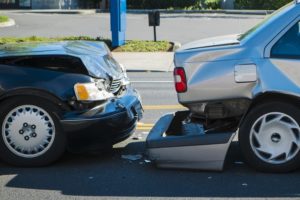
Huff Insurance, Pasadena MAryland, Rear End Car Accident, Auto InsuranceSure, you’re a responsible driver. But is the Maryland minimum, bare bones auto insurance coverage really sufficient to cover your risks?  I suspect not.

Yes, every state imposes a minimum on liability insurance coverage. This coverage not only protects you against having creditors forcibly seize your assets and land you in bankruptcy court; it also helps protect others around you, by ensuring that no matter what their medical issue or damages, there is enough liquidity on the table to make sure they are economically protected.

But state minimums aren’t designed for most individuals, especially the affluent, and do not provide you with the real protection you need. State legislatures must set liability minimums low enough so that car insurance coverage is affordable even for poor families – so at least they’ll get something rather than drive completely uninsured. State minimums are not designed to provide really adequate protection for drivers who have assets or make a decent income and are those who are targets for legal action.

The Owner is At Risk

Remember, even if you lend your car to someone else for the weekend – if he or she crashes it, and causes damage, it’s you, as the car owner, who is ultimately responsible. Owners are first in line, ahead of drivers, when plaintiffs’ lawyers start looking to collect on damages not covered by auto insurance.

How Big Can Judgments Be?

Judgments for damages in auto accidents are very frequently $50,000 and over and can range into the millions. We looked at actual judgments obtained by just one small law firm, and found instances like these:

  • $200,000 in liability for just one accident involving a motorcycle.
  • $265,000 for a T-bone auto accident.
  • $300,000 for a leg injury to a pedestrian.
  • $750,000 for a rear end accident with injury.
  • $2,000,000 for another rear-end accident with serious injury.
  • 2,900,000 for a wrongful death claim.

The Maryland state-mandated minimum of $30,000 per person/ $60,000 per accident/ $15,000 property damage per accident might cover most fenderbenders, but it is woefully inadequate for the real risk. If you are sued, and the plaintiff wins, you will be held responsible for the whole judgment over the amount of your coverage.

Asset Protection

If someone involved in an auto accident sues you and wins, he will receive a payment from your car insurance company, up to the limit of coverage.  When the payment is inadequate, they may take additional action. They may sue to seize your personal assets – your bank account, your vehicles, property, business and even your home in some jurisdictions. They may also file to garnish your wages. Can you imagine losing 30% of your income to a garnishment?  The fallout could easily force you into bankruptcy – and severely disrupt your life.

If you have any kind of hard-earned assets that are at risk of creditor action, you may want to consider buying extra liability insurance coverage.  The more assets you have, the more likely you are to be targeted. After all, plaintiffs’ lawyers know that judgments are easier to collect from the affluent than the poor. But even middle class people have a lot to lose by carrying inadequate liability insurance coverage.

Liability Insurance

You may consider two kinds of insurance: additional liability insurance for your car, over and above the state-mandated minimum, and an umbrella insurance policy, which helps protect your assets against losses from a wider variety of sources. This can be especially important for parents of teenagers who are risky drivers and who may drive someone else’s car, or have a party at the house while you and other adults are out of town. When a youngster leaves the party at your house after drinking, and has a wreck, you could be held liable.

To assess your exposure, sit down with a licensed insurance professional, your attorney, or both. It’s easy to tailor a remarkably affordable plan to provide more realistic protection against the actual risks of liability – but you have to do it before the accident.


Should You Purchase the Insurance When Renting a Car?

by Jerry Nicklow

Purchasing a Collision Damage Waiver on Your Rental Car Makes Sense

Although the fees can be considerable, it may be a good idea to purchase a collision damage waiver the next time you rent a car. You may believe you have enough protection from your Personal Auto Insurance Policy; however, that’s just not the case. Your auto insurance policy covers the lesser of the actual cash value of the car or the minimum amount to repair or replace it. Your contract with the rental car company may require you to reimburse them for the full value of the vehicle. Meaning, you would have to make up the difference out-of-pocket. Your auto insurance policy also may not pay for any increased value of new parts replacing old ones, or any diminution of value, meaning if the market value of the vehicle after repairs is less than that before the accident.  Again, if that is the case, then you would have to make up the shortfall.
Another area where the waiver can be of great importance is in the settlement process. Your auto insurance company has the right to inspect and appraise the damaged car before repair or disposal.  However, the rental company is not bound by the terms of your auto insurance policy, and it may opt to complete the repairs immediately. This would result in your not being covered because you didn’t comply with the terms of the policy.

The rental agreement may require immediate reimbursement for damages. Without the waiver, they could charge your credit card. This can create a significant debt and put you over your credit limit.

Rental agreements often make the renter responsible for any loss in value beyond normal wear and tear, regardless of the cause or who’s at fault. Your PAP doesn’t cover this contingency unless you insure at least one vehicle for both collision and other-than-collision coverage.

You could, and most likely would be responsible for the rental company’s loss of income on the damaged car. Your policy may have limited coverage for these charges. The same is true for any administrative or loss-related expenses such as towing, appraisal, claims adjustment, and storage fees you may be charged.

Your auto insurance policy is considered excess coverage if:

  • Any coverage is provided by the owner of the auto.
  • There is any other applicable physical damage insurance.
  • There is any other source of recovery applicable to the loss, such as travel policies, credit card coverage, etc.

This can create a controversy over who pays, which can result in litigation. Keep in mind that many states have statutes that may govern this eventuality.

The auto insurance policy does not provide physical damage coverage for vehicles that are not private passenger cars, pickups, vans, or trailers. The use of covered vehicles is limited to the U.S., its territories and possessions, Puerto Rico, and Canada. If you rent a trailer, coverage may be limited to $500.

The car insurance policy may have limitations on use of vehicles that are not excluded by the rental agreement collision damage waiver. The insurance policy may also exclude certain drivers or may apply only to designated individuals. The collision damage waiver will probably also only apply to certain individuals, but operators for which no auto insurance coverage is available may be protected under the rental agreement by adding them as designated drivers.

The auto insurance policy will typically include a deductible in the range of $100-$500 or more. In addition, payment for damage to a rental car may result in a significant premium increase because of surcharges or loss of credits. Having a collision damage waiver, or loss damage waiver, will protect you from paying increased premiums.


Don’t Let Driving Emergencies Take You by Surprise

Most Common Driving Emergencies

There are two golden rules to remember when driving – expect the unexpected and be ready for anything. Many agencies, such as the National Safety Council, have compiled listings of the most common driving emergencies and the ways that drivers can best handle them safely. Let’s look at six of them:

1. Blown Tire

If you encounter this driving emergency, don’t over-steer.  But do maintain a firm, steady grip on the wheel to keep the vehicle going in the desired direction until you’re able to slow it down.

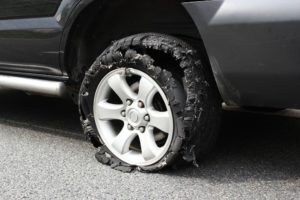
Keep in mind that a front blown tire will cause the vehicle to pull toward the blowout’s side, while a rear blown tire will cause the vehicle’s rear end to weave. Apply your brakes smoothly and slowly enough that you can pull the car to the side of the road at a safe speed. Never immediately swerve to the side of the road or jam on the brakes as you could lose control.

2. Blown / Malfunctioning Headlights

Slowly brake and come to a stop on the right shoulder. Try to get as far away from passing traffic as possible. Turn on your emergency flashers, if they’re still operational, and place road hazard markers or flares at least 300 feet from the rear of your vehicle.

If you don’t have a cell phone to call for roadside assistance, then you can open the hood and try to scrape the battery cable’s lead terminal posts and the inside of connector lugs. This may provide a better connection and enough intermittent light to make it to a phone. As a last resort, you could use your emergency flashers as an intermittent light source if they’re on a separate circuit.

3. Skidding Vehicle

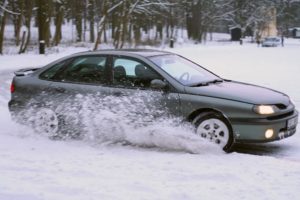
This is a common driving emergency during weather events, like snow, ice or rain.

Remove your foot from the gas. Steer into the direction of the skid until you feel your rear wheels get traction again. Now, straighten the wheel. Never jam on the brakes or over-steer during the skid. To avoid skidding to one side when you need to come to a sudden stop, you can rapidly jam and immediately release the brakes. For those with anti-lock brakes, keep your foot on the brake and continue firm pressure while steering.

4. Engine Failure

Turn your right signal on and let the vehicle’s momentum carry you to the shoulder. If this isn’t a possibility, then remain in your lane or along the right side. Pump your brakes and turn your emergency flashers on to let other drivers know you’re in trouble. Once you’ve come to a stop, you’ll ideally exit the vehicle on the side without traffic flow. You can alert other vehicles by placing reflectors or flares; keeping your taillights on; and placing a white cloth around your handle, spoiler, or antenna. Use your cell phone to call for help or flag down a law officer. There may be an emergency call box on long bridges.

5. Stuck Accelerator

Turn off the ignition and apply the brakes. Keep in mind that your power assist feature will no longer work and braking and steering will be more difficult. Never lean down to handle the gas pedal, but you can try to lift the pedal with your toe if the pedal and throttle linkage have a positive connection.

6. Brake Failure

If your brakes still functioning properly, but you have a system light indicating a brake failure, then you should slowly take the most level route to a service station or mechanic shop.

If your breaks don’t feel normal, but are still offering some resistance, then pump them rapidly. This action could build enough hydraulic pressure to slow your vehicle down. You might be lucky enough to have a clear road and be able to coast to a stop or roll and apply your parking brake. Use your horn and flash your lights to alert pedestrians and other vehicles. You might need to carefully sideswipe hedges, snow banks, parked cars, and/or guardrails to help your vehicle stop if your on a downward, steep roadway.

Never swerve to the left of a vehicle in your path unless it’s your only choice. If you’re headed straight for another vehicle, firmly press the brakes; head for a shoulder, ditch, or open ground on the right side; and try to alert others with your horn.

Driving emergencies are hard to think through as they’re happening. For the best outcome possible, you’ll need to know what the potential emergencies are, know how to safely deal with them ahead of time, and make the subjects part of your family’s safety discussions.


A Message from the SPHS SADD President

Severna Park High School SADD Program, Marty Huff, Huff InsuranceMy internship in the office may have ended this summer, but that doesn’t mean I stop helping people. Much like how we at Huff Insurance help protect you, SADD looks to help protect students. As the President of the SADD club at Severna Park High School I have learned a lot, and I take that newfound knowledge and pass it on to other students and spread the message of SADD, and hope to persuade other students to buy into the SADD message.
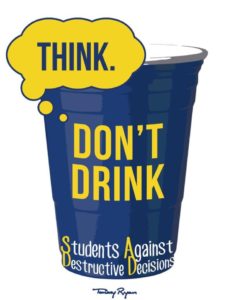
You may be saying to yourself, “Well that’s all great, but what in the world is SADD?” Founded by students in 1981 in Massachusetts as “Students against Drunk Driving” SADD had grown to become one of the nation’s leaders in youth education and prevention for drunk driving. In 1997, SADD expanded their name and mission to “Students Against Destructive Decisions.” SADD now highlights prevention of all destructive behaviors and attitudes that are harmful to young people, including underage drinking, substance abuse, impaired driving, violence, and suicide. Today, SADD’s mission is “to provide students with the best prevention tools possible to deal with the issues of underage drinking, other drug use, risky and impaired driving, and other destructive decisions.”

Severna Park High School SADD Program, Marty Huff, Huff Insuranc
Car accidents are the leading cause of death amongst teenagers, followed by homicide, and suicide. Teenagers are also at the age of what they do now, can and will affect them later in life. Today, SADD chapters are nationwide and affect millions of students each year.  SADD was founded on the simple philosophy that young people, empowered to help each other, are the most effective force in prevention. With thousands of chapters nationwide and a strong network of state coordinators and school-based advisors, SADD is uniquely positioned to help young people with the growing threats to their health, happiness, and safety. Through their campaigns and activities, SADD chapters influence millions of people in schools, families, local community organizations, businesses, law enforcement agencies, and the media. As an active, established youth program, SADD reaches into more schools and touches more young people for longer periods of time than does any other program.

Most of the high schools in Anne Arundel County have established SADD Chapters. At Severna Park High School, I am fortunate enough to be president of this outstanding club that means a great deal to me. When I’m working as intern in the insurance office during the summer, I love knowing what I do is to protect our clients, and every time I hear our agents on the phones, or talking to our clients in person, I like knowing they are doing everything they can to look out for you. That’s why when I return to school, I like knowing what I’m doing with SADD is not only helping myself, but my fellow classmates, and the school and community as a whole.

I can’t do it alone; I have fantastic teachers who help with the organization. I also have great support from other teachers in the school, as well as administration. I also have tremendous students who come to meetings, and help with meeting planning and activities to show our school how to make positive choices, and why they should think again, before they make a destructive decision. I encourage you all to visit the national SADD website at www.sadd.org. For more information, specifically on the Severna Park SADD chapter, email SPHSSADD@gmail.com

Huff Insurance is a proud sponsor of the Severna Park High School SADD club.

Severna Park High School SADD Program, Marty Huff, Huff InsurancIf you would, or your business would like to donate/sponsor the Severna Park High School SADD chapter please send an email to SPHSSADD@gmail.com. We would greatly appreciate any donation and is a tremendous help to get the word out, and prevent teenagers in our community from making destructive decisions.

Possibly related posts:

Bicycle Safety and How Can Bicycles Be Insured?

Being Summertime, many bike owners hit the road on a daily basis

Whether bike owners plan to participate in competitions, ride for exercise, or just take a ride around the block with the family, it is important for them to understand the rules of the road. It is also important to be adequately insured.

Insuring A Bicycle

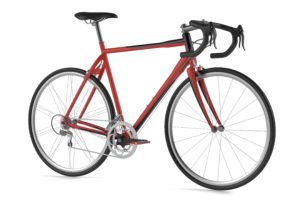
I recently have gotten into cycling and know first hand that bicycles vary greatly in price these days. A simple model may cost several hundred dollars, and a racing bike, like a Litespeed, Trek or Felt, could cost several thousand to tens of thousands of dollars.  I have talked to a young lady where I bought my bike at the  Bike Doctor in Crofton, Maryland who was looking to buy a $15,000 bike.  Although that is probably one incredible bike, it was not the bike for me at this time…..  Which leads to the question,

How do you properly insure these bicycles?

Personal property provisions in a homeowners insurance or renters insurance policy do cover bicycles. This means bikes that are damaged by a covered peril or stolen are usually covered. Bikes stolen from cars are also covered under many policies. For personal property coverage, there are two options: Replacement cost coverage and actual cash value.

Replacement Cost Coverage
This type of insurance provides reimbursement for the cost of replacing a bicycle with a similar one at the current cost. Replacement cost coverage usually costs about 10 percent more than its alternative. However, it is still a wise investment.

Actual Cash Value
This option provides reimbursement for the actual value of the bicycle at its current age. This means a bicycle that is five years old would be valued at the cost of a comparable product. However, depreciation for the bike’s age would be calculated and deducted from that value.

Liability insurance protection is also granted in a homeowners insurance or renters insurance policy, so harm caused to others on their property will be covered. For example, if an insured crashes into a person on that person’s property and causes injuries, the policyholder’s insurance company will cover up to a specific dollar amount. It is important for all policyholders to know what their maximum coverage amount per incident is.

Most people are insured for an amount between $300,000 and $500,000. However, some people purchase umbrella insurance policies to expand that amount. The umbrella insurance policy’s benefits kick in when the homeowners insurance policy is maxed out. There is also no-fault medical coverage on a homeowners policy. This coverage usually ranges between $1,000 and $5,000. In the event of an injury, the injured party can simply submit a medical claim to the policyholder’s insurance company for hospital bills. Keeping a policy updated is the best way to avoid an expensive lawsuit.

If you purchase an expensive new bicycle, save the receipt and call your local Trusted Choice Independent Insurance Agent to notify him or her about the new purchase. Keep in mind that helmets, pumps, saddle bags, lights and special clothing should be included on insurance. People who own very expensive bicycles should purchase endorsements for their renters insurance or homeowners insurance policies to specifically schedule the bicycles.  Many insurers have special endorsements for sporting equipment, and some even have specific endorsements for bicycles.

Insurance is certainly an important aspects of bicycle ownership. However, bicycle safety is crucial. As a bicyclist myself, i find that sharing the roads with motor vehicles can be dangerous.  To stay safe on the road this year, consider the following cycling safety tips:

– Always wear a helmet.
– Make sure the bike fits properly and does not have any unsecured parts.
– Ride on the correct side of the road, watch (and listen) for traffic and use hand signals.
– Learn and follow all the rules of the road.
– Always stay alert, and be aware of surroundings at all times.
– Avoid wearing headphones or a cellular headset while riding.
– If necessary, take safety classes before hitting the road.
– Be more visible by wearing bright colors, using lights and wearing reflective gear after dark. (Pictured is Jerry Nicklow, CFO, Huff Insurance)