

Protecting Lifestyles

Protect Your Assets And Income
From Disasters And Lawsuits!

Request a Quote
Satellite image of Hurricane Helene forming over the ocean, with a large swirling eye and spiraling cloud bands extending outward. The storm is labeled "Helene" in bold text, emphasizing its presence. The image highlights the intensity and scale of the hurricane, showcasing its potential impact on both coastal and inland areas. Ideal for visual content on natural disasters, storm preparedness, and flood insurance awareness. This visual reinforces the importance of understanding hurricane risk and the need for comprehensive insurance coverage, especially in the aftermath of Hurricane Helene’s unexpected inland flooding.

Flood Insurance After Hurricane Helene

Flood Insurance After Hurricane Helene: Why Non-Coastal Homeowners Should Reconsider Their Coverage

Satellite image of Hurricane Helene forming over the ocean, with a large swirling eye and spiraling cloud bands extending outward. The storm is labeled "Helene" in bold text, emphasizing its presence. The image highlights the intensity and scale of the hurricane, showcasing its potential impact on both coastal and inland areas. Ideal for visual content on natural disasters, storm preparedness, and flood insurance awareness. This visual reinforces the importance of understanding hurricane risk and the need for comprehensive insurance coverage, especially in the aftermath of Hurricane Helene’s unexpected inland flooding.When people hear about hurricanes, their minds often go straight to beachfront properties and coastal communities. It’s easy to imagine surging waves crashing against shorelines and wind-swept sands when thinking about flood risk. However, Hurricane Helene threw a wrench in those expectations by causing unprecedented flooding in areas far from the coast. This storm served as a stark reminder that when it comes to flooding, nowhere is truly “safe.”  meaning every homeowner and business owner should think about getting flood insurance.
The Misconception of “Low-Risk” Areas

Many homeowners living in non-coastal regions operate under the assumption that they’re safe from flood damage. Because of this, flood insurance rarely makes it onto their list of coverage needs. But as thousands of residents affected by Hurricane Helene’s inland flooding learned the hard way, even properties far from the ocean can face serious flooding risks.

In fact, the Independent Insurance Agents and Brokers of America reports that  about 40% of flood claims come from homes in areas not considered high-risk. This means that even if you live miles away from any major body of water, your property might still be at risk from sudden heavy rainfall, overflowing rivers, or saturated grounds—conditions that can cause devastating floods.

Why General Home Insurance Isn’t Enough

The biggest mistake many homeowners make is assuming that their standard home insurance policy will cover flood damage. Unfortunately, the reality is that most home insurance policies specifically exclude flooding from coverage. This means that in the event of a flood, homeowners without a separate flood insurance policy are left footing the bill for costly repairs.

In the aftermath of Hurricane Helene, many people in non-coastal areas are facing repair costs that can range anywhere from thousands to hundreds of thousands of dollars. And while FEMA assistance might be available, it’s often limited and may not fully cover the extent of damages.

Affordable Protection: The Benefits of Flood Insurance

Flood insurance is often much more affordable than people think—especially for properties not located in high-risk flood zones. For homeowners in these lower-risk areas, premiums can be surprisingly low, yet the coverage can be invaluable. A typical flood insurance policy can cover:

  • Structural damage to your home.
  • Foundation repairs.
  • Electrical and plumbing systems.
  • HVAC equipment (heating, ventilation, and air conditioning).
  • Appliances like refrigerators, stoves, and dishwashers.
  • Personal property and belongings.

Even better, purchasing flood insurance now means you’re prepared for the unexpected, rather than scrambling for coverage when the next storm is on the horizon.

Understanding Your Risk: It’s More Than Proximity to Water

So, how do you know if you need flood insurance? The answer involves a little research and a lot of realistic thinking. Consider these questions:

  1. Is your property in or near a floodplain?
    Even if you’re not in a designated high-risk area, nearby bodies of water or changing weather patterns can increase your risk.
  2. Have you experienced heavy rainfalls in your region?
    Hurricane Helene demonstrated that even short but intense periods of rainfall can overwhelm local drainage systems, causing unexpected flooding.
  3. How would you handle the cost of repairs if a flood did occur?
    With the average flood claim amounting to tens of thousands of dollars, it’s crucial to weigh the potential financial impact of being uninsured.

Don’t Wait Until It’s Too Late

Hurricane Helene was a wake-up call for many, proving that flood risk is a concern for everyone, not just those living by the coast. Investing in flood insurance now means peace of mind, knowing that your home and finances are protected from the next unpredictable storm.

Remember, flood insurance policies typically have a 30-day waiting period before coverage takes effect, so don’t wait until the next storm warning to consider your options. Contact an insurance professional today to discuss your coverage needs and ensure that you’re fully protected—no matter where you live.

Stay safe, stay protected, and don’t let the next storm catch you unprepared.

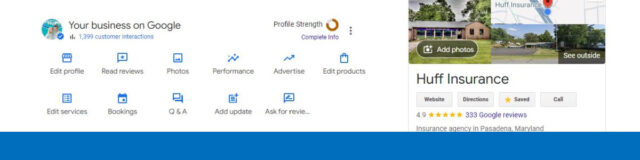
Google Business profile page for Huff Insurance, displaying customer interactions, profile strength, and options to update business information in Pasadena, Maryland

Keeping Your Google Business Page Up to Date

Why Keeping Your Google Business Page Up to Date is Essential for Your Business

Maintaining an updated Google Business page is crucial for modern businesses looking to build their online presence. In today’s competitive market, your Google Business profile acts as a digital front door for potential customers. From accurate contact information to the latest reviews, keeping your Google Business page up to date can make a big difference in how customers find and trust your business.

As the marketing director

What is a Google Business Page?

A Google Business page, also known as a Google Business Profile, is a free tool that allows businesses to manage how they appear across Google Search and Google Maps. This profile includes vital details like your business name, address, phone number, website, and hours of operation. Customers can also view reviews, post questions, and see updates you make, like promotions or new services.

With so much information available at customers’ fingertips, ensuring your page is accurate and regularly updated can be a game-changer for your business.

If you have not claimed your Google Business Page, you should do it now.  It is very important.

Why Keeping Your Google Business Page Up to Date Matters

Improve Local SEO Rankings

When someone searches for a service near them, Google uses local SEO to determine which businesses to show first. A well-maintained Google Business page boosts your chances of appearing in these local search results, making it easier for potential customers to find you. Google favors businesses that actively update their profile, respond to reviews, and post new content. If you’re not keeping your page up to date, your business may get buried beneath competitors who are more active online.

Build Trust with Customers

An outdated Google Business page can send the wrong message. If your hours of operation, phone number, or website link are incorrect, customers may assume your business is unreliable. On the other hand, businesses that consistently update their profile demonstrate to customers that they are professional and actively engaged with their audience. Accurate information helps build trust, which is crucial for winning over potential clients.

Imagine a customer looking for your services, only to find your Google Business page lists the wrong hours. They might go to your competitor simply because they couldn’t reach you!

Manage Customer Reviews and Feedback

Google Business pages allow customers to leave reviews, which are critical in shaping your online reputation. Regularly checking and responding to reviews—whether positive or negative—shows that you care about customer feedback. Positive reviews build credibility, while responding to negative ones in a helpful and timely manner can turn a bad experience into a good one.

Keeping your Google Business page up to date means you’re always on top of what customers are saying, which lets you address concerns and highlight glowing testimonials.

Share Timely Updates and Promotions

Does your business have a seasonal promotion or a new product? Your Google Business page allows you to share updates, offers, and events directly with people searching for your services. Updating your page with the latest news keeps your profile dynamic and engaging. These posts show up directly on your profile and can entice customers to click for more information, visit your website, or stop by your physical location.

A static page that never changes might lose the interest of potential customers. By keeping your profile fresh with regular updates, you stay relevant and top-of-mind.

How to Keep Your Google Business Page Up to Date

Now that we’ve covered why it’s important, let’s discuss how you can maintain your Google Business page:

1. Update Business Information Regularly

Whenever you make a change to your business—whether it’s new hours, a new phone number, or a relocation—make sure to update your Google Business profile immediately. It’s also good practice to check your listing every few months, even if nothing has changed.  You’d be surprised how many times we see outdated business hours on listings.  If you have seasonal hours, holiday hours, etc., make sure you keep them up to date on your google profile.

2. Add New Photos

Visuals play a big role in attracting customers. Regularly upload new photos of your business, products, or team. According to Google, businesses with photos receive 42% more requests for directions and 35% more clicks to their websites.

3. Post Updates and Promotions

Use the “Posts” feature on your Google Business page to share news, promotions, and upcoming events. This keeps your profile active and engaging, giving customers reasons to come back and check out what’s new.  It is a great way to share your blogs and content.  It can provide valuable links back to your website.  Doing this can help improve organic SEO results.

4. Respond to Reviews

Set aside time to respond to customer reviews, both positive and negative. Engage with your customers to show you value their feedback and are committed to improving their experience.  There is even a way to automate your responses to these Google review.  If you know how to use ChatGPT and Zapier, these can auto generate based on your requirements.

5. Monitor Insights

Google Business provides insights on how customers find your profile, whether they’re searching directly for your business or discovering you through related services. Use this data to adjust your online strategy, like posting more updates or adding keywords.

Conclusion

In today’s digital-first world, your Google Business page is one of the most visible aspects of your business. Keeping your Google Business page up to date isn’t just a nice-to-have—it’s essential for staying competitive in local searches, building trust with customers, and managing your online reputation. The more effort you put into regularly updating your profile, the more rewards you’ll reap in customer engagement and sales.

As a customer benefit, Huff Insurance offers my services or our Marketing Director,  to consult with our business customers.  Become a customer today to benefit from this value added service.

Chart showing the rise of minimum wage and minimum payroll, impacting workers' compensation and general liability insurance costs for Maryland business owners, Huff Insurance.

Minimum Payroll Increases Impact Business Insurance Policies

How Minimum Payroll Increases Impact Business Insurance Policies

In Maryland, recent changes in minimum wage laws have resulted in minimum payroll increases rating business insurance policies. These changes, particularly in workers’ compensation and general liability insurance, impact the cost of coverage for many businesses. For business owners, officers, and executives, this means keeping a close eye on how payroll adjustments can increase insurance premiums.

Let’s explore how these minimum payroll increases for insurance rating are affecting Maryland businesses and how you can manage these changes.


Why Minimum Payroll Is Important for Insurance Rating

Insurance companies use payroll to assess risk exposure and calculate premiums for both general liability and workers’ compensation insurance. Payroll represents a significant factor in determining the size of your business and the level of risk associated with employee injuries or liabilities.

When Maryland’s minimum wage goes up, businesses must adjust their payrolls to comply with the law. This increase affects the minimum payroll thresholds set by insurers for business owners, officers, and employees, which in turn impacts how insurance premiums are calculated.


Minimum Wage Increases in Maryland and Their Impact on Workers’ Compensation

In Maryland, workers’ compensation insurance provides essential coverage for employee injuries that occur on the job. The premiums for this coverage are directly tied to a business’s payroll. For workers’ comp purposes, the state sets minimum payroll limits for business owners, which increase when the minimum wage rises.

Maryland’s Minimum Wage in 2024

Maryland’s minimum wage rose to $15.00 per hour for most employers in 2024, with smaller businesses catching up shortly after. This wage hike means that businesses must pay their employees more, and for insurance purposes, the payroll used to calculate workers’ compensation rates will increase as well.

Also, with the consistent wage increases accross the nation, the minimum owner / officer rating payroll has risen to around $72,800 according to the National Council on Compensation Insurance (NCCI). Even if an owner’s personal salary doesn’t change, the minimum payroll for rating their workers’ compensation policy will increase with inflation. This will lead to higher premiums.  The insurance companies assume that the owners of a business are making at least this amount to own and operate a business.  This can be in direct payroll, profit distributions. or a combination of these and company paid benefits.

In essence, workers’ comp premiums are rising for many Maryland businesses as a direct result of minimum wage increases. While this may seem like an unwelcome financial burden, it ensures that injured employees receive the compensation they need, and businesses are adequately protected.


General Liability Insurance: How Minimum Payroll Affects Maryland Business Owners

General liability insurance covers a business for claims of bodily injury, property damage, and other risks. Like workers’ comp, the premiums for this type of insurance can also depend on payroll levels. When Maryland businesses experience payroll increases due to wage law changes, their general liability insurance premiums often rise as well.

For many Maryland business owners, this is especially relevant for officers or executives who may have a minimum payroll threshold applied to them by the insurance company. The minimum payroll level for business owners and officers in Maryland might be adjusted to reflect higher wage standards, even if the actual salaries of these individuals remain the same.  We have been seing he minimum payroll thresholds increasing by about 30% (from about $25,000 to about $33,000) since Maryland increased their minimum wage to $15 per hour.

By setting a higher minimum payroll threshold, insurers ensure that Maryland businesses have adequate coverage, but this also leads to increased costs.


How Are Maryland Businesses Affected?

Several industries in Maryland are particularly affected by minimum wage and payroll increases.  Especially those with lower-wage workers or high employee counts. These include:

  1. Hospitality – Restaurants, hotels, and other hospitality businesses employ a large number of hourly workers. As the minimum wage rises, so do the insurance premiums for workers’ comp and general liability.
  2. Construction – Construction companies often operate with higher risks, which already increases their insurance costs. Now, rising payroll levels due to minimum wage increases are further elevating workers’ comp premiums in Maryland.
  3. Retail – Retailers, particularly smaller ones, are seeing their insurance costs rise as a result of both increased wages and higher payroll levels used to rate their insurance policies.

Even smaller businesses that employ just a handful of workers are likely to feel the impact of these changes. The higher the payroll, the more significant the increase in premiums for both workers’ compensation and general liability coverage.


How Maryland Business Owners Can Manage Insurance Costs

Rising insurance premiums due to minimum payroll increases might seem like an inevitable cost of doing business, but there are strategies you can use to mitigate the impact:

1. Classify Employees Correctly

One way to manage costs is by ensuring that employees are correctly classified. Workers’ compensation premiums are calculated based on the risk levels associated with each job. Maryland business owners should review their classifications regularly to avoid paying higher rates for low-risk jobs.

2. Consider Safety Programs

Investing in workplace safety measures can lower your workers’ comp premiums over time. Maryland businesses that prioritize safety can reduce the number of workplace injuries.  This leads to fewer claims and, in turn, lower premiums.

3. Work with a Trusted Insurance Agent

An experienced insurance agent, such as those at Huff Insurance, can help your businesses navigate the complexities of changing minimum payroll requirements. We can assist you in finding the best policies, negotiating better rates, and ensuring you’re not overpaying for coverage.

4. Explore Pay-As-You-Go Workers’ Comp Policies

In Maryland, some insurance companies offer pay-as-you-go workers’ compensation policies. These policies allow businesses to pay premiums based on actual payroll rather than an estimated amount.  This can help smooth out fluctuations due to minimum wage increases.  This method also smooths out the audit process as the company already knows the annual payroll number at the end of the policy term.


Conclusion: Stay Prepared for Minimum Payroll Increases in Maryland

As Maryland’s minimum wage continues to rise, businesses must be prepared for the ripple effects on their insurance policies. Understanding how minimum payroll increases affect your general liability and workers’ compensation premiums is crucial to keeping your business protected without breaking the bank.

At Huff Insurance, we help Maryland business owners navigate these changes by providing personalized guidance and policy reviews. If you’re concerned about how minimum wage increases will impact your insurance premiums, contact us today to get started.

Loaded handgun resting on a bed with ammunition nearby, highlighting the importance of secure firearm storage and gun safety in the home. Huff Insurance promotes responsible gun ownership and safety practices in Maryland

Gun Safety in the Home

Gun Safety in the Home: Essential Tips to Keep Your Family Safe

Handgun securely stored in a white lockbox, showcasing proper gun safety storage practices. Huff Insurance advises secure firearm storage to prevent unauthorized access in Maryland homesOwning a gun comes with significant responsibility, especially when there are others living in your home. Whether you’re a new gun owner or have had firearms for years, ensuring gun safety in the home is crucial to preventing accidents. Safe gun practices protect your family and others, creating a secure environment for everyone.  Don’t let lack of gun safety procedures land your family in the news.

Let’s dive into key gun safety tips that will help you achieve peace of mind while promoting responsible gun ownership.


Why Gun Safety Matters

The presence of a firearm in the home can offer protection in dangerous situations, but it also increases the risk of accidental injury. According to the National Safety Council, nearly 500 accidental gun deaths occur every year in the U.S., and many of these involve children who unknowingly access firearms. By following gun safety practices, you can significantly reduce the chance of accidents, ensuring that your weapon is only used when necessary.


Secure Storage: The Foundation of Home Gun Safety

One of the most effective ways to prevent accidents is by securing your firearms. Guns should always be stored unloaded, locked, and out of reach. Here are a few ways to safely store firearms:

  1. Gun Safes: A high-quality gun safe is one of the best investments a gun owner can make. Look for safes that are difficult to tamper with and have combination or biometric locks for added security.
  2. Locking Devices: Trigger and cable locks are another layer of safety. These make it impossible for the gun to fire, even if someone gains access to it.
  3. Ammo Storage: Keep ammunition in a separate, locked location. Storing your ammo apart from your gun adds an extra layer of protection.

Following these steps ensures that your firearm is inaccessible to children or unauthorized users, minimizing the chance of accidental discharges.


Teaching Gun Safety to Your Family

It’s essential that everyone in your household understands the dangers and responsibilities that come with having a firearm. Educate children about gun safety as soon as they are old enough to understand. Here are key lessons to teach:

  1. Stop, Don’t Touch, and Tell an Adult: If a child encounters a gun, they should stop what they’re doing, avoid touching the firearm, and immediately inform an adult.
  2. The Difference Between Toys and Guns: Make sure children understand that real guns are not toys and should never be handled without adult supervision.
  3. Respect for Firearms: Teach your family that guns are tools, not playthings, and they should always be treated with respect.

Having these conversations early on can prevent curiosity-driven accidents. Remember, if you have teenagers in the house, it’s vital to reinforce these lessons and remain vigilant.


Handling a Firearm: Best Practices for Safety

Even when you’re using your firearm, there are important safety rules to follow. These guidelines can prevent accidents while handling your weapon:

  1. Always Assume the Gun is Loaded: Treat every firearm as if it is loaded, even if you believe it’s empty. This mindset reduces the likelihood of an accidental discharge.
  2. Point in a Safe Direction: Never point a gun at anything you’re not willing to shoot. Always ensure the muzzle is directed away from people, pets, or valuable property.
  3. Finger Off the Trigger Until Ready to Shoot: One of the most critical safety rules is keeping your finger off the trigger until you’re fully ready to fire. Many accidental shootings occur because the trigger was touched prematurely.

These habits will help you maintain control over your weapon at all times, whether you’re at home or the shooting range.


Gun Safety and Visitors

If you frequently have guests in your home, especially children, it’s important to take extra precautions with your firearms. Never assume that visitors have the same knowledge about gun safety that you or your family possess. Before guests arrive, make sure all firearms are locked and secured. If other gun owners are visiting, discuss ground rules about safety, particularly if they’re bringing their own firearm into your home.


Safety in an Emergency: Quick Access Without Compromising Security

Many gun owners keep a firearm at home for self-defense. In an emergency, you may need to access your gun quickly. There are ways to balance fast access with safety, such as using biometric safes or combination lockboxes designed for rapid opening. These options give you peace of mind knowing that your firearm is secure from unauthorized users, yet accessible when needed.


Regular Maintenance for Safe Gun Ownership

Neglecting gun maintenance can lead to malfunctions, which could cause a safety issue. Make sure to regularly clean and inspect your firearm. Here’s what to focus on:

  1. Cleaning: Keep your gun free from dirt and buildup, which can cause jamming.
  2. Inspecting: Check for worn-out parts or other potential problems that could affect the performance of the firearm.
  3. Function Testing: Ensure that all mechanisms are working correctly after cleaning. If something seems off, take the gun to a professional for inspection before using it.

By maintaining your firearm, you ensure it will operate safely and effectively when needed.


Final Thoughts on Home Gun Safety

Gun safety in the home is about responsibility, awareness, and education. By securing your firearm, teaching your family the importance of gun safety, and following best practices for handling, you can significantly reduce the risk of accidents. Remember, your actions not only protect your loved ones but also set an example for others about the importance of responsible gun ownership.

Picture of gloved hand cleaning a gutter Gutter Cleaning is important for Fall home maintenance | Huff Insurance, Pasadena, MD

Essential Fall Home Maintenance Tips

Fall Home Maintenance Tips: Prepare Your Home for the Colder Months

As the vibrant colors of fall begin to take over and the air turns crisp, it’s time to prepare your home for the upcoming winter season. Fall is the perfect time to tackle essential maintenance tasks that will protect your home from harsh weather and keep it running efficiently. By taking care of these tasks now, you can avoid costly repairs and ensure a cozy winter for your family. Here are some top fall home maintenance tips to get your home in peak condition.

1. Clean and Inspect Gutters and Downspouts

One of the first tasks on your fall checklist should be cleaning out your gutters and downspouts. As leaves fall, they can quickly clog gutters, leading to water damage and ice dams during winter. After clearing debris, flush your gutters with water to ensure they are draining properly. Inspect joints and brackets to make sure everything is secure and functioning as it should. This simple maintenance task can prevent significant problems like roof leaks and basement flooding.

2. Seal Windows, Doors, and Exterior Cracks

As temperatures drop, drafty windows and doors can lead to higher heating costs. Check all windows, doors, and exterior cracks for gaps where warm air could escape. Apply weatherstripping around doors and caulk around windows to seal these gaps. Additionally, inspect your home’s foundation and siding for any cracks and seal them to prevent water intrusion, which can cause mold and structural damage over time.

3. Roof and Chimney Maintenance

Before winter sets in, it’s crucial to ensure your roof and chimney are in good condition. Look for missing, loose, or damaged shingles that could allow water to seep into your home. If you have a chimney, check for cracks or blockages, and have it professionally cleaned to remove creosote buildup, which can be a fire hazard. This proactive step can prevent leaks and ensure your chimney operates safely throughout the colder months.

4. Service Your Heating System

Fall is the ideal time to have your heating system serviced. Whether you use a furnace, heat pump, or fireplace, regular maintenance ensures that it operates efficiently and safely throughout the winter. Replace your furnace filter, clean ducts and vents, and test your thermostat to make sure everything is in working order. Proper maintenance can also help you save on energy costs by ensuring your heating system runs efficiently.

5. Protect Outdoor Furniture and Equipment

As you prepare for winter, don’t forget about your outdoor furniture and equipment. Store or cover outdoor furniture to protect it from the elements. If you have a deck, now is the time to seal it to protect against moisture damage. Additionally, store away garden tools and lawn mowers after ensuring they are clean and properly maintained. This will help extend their lifespan and save you from having to replace them in the future.

6. Lawn and Garden Preparation

Fall is the perfect time to give your lawn and garden some attention before winter sets in. Rake leaves regularly to prevent them from smothering the grass, and consider aerating your lawn to help it breathe. Fertilize your lawn, trees, and shrubs to give them the nutrients they need to survive the winter. Additionally, clean out garden beds, trim back overgrown shrubs, and apply mulch to protect plant roots from freezing.

7. Check Insulation and Ventilation

Proper insulation and ventilation are essential for keeping your home warm and dry during the winter months. Inspect your attic and basement to ensure they are well-insulated, and check that vents are clear of obstructions. Good insulation will keep your home warm, while proper ventilation will prevent issues like mold and ice dams, which can occur when warm air escapes into the attic.

8. Test Smoke and Carbon Monoxide Detectors

As you prepare to spend more time indoors, make sure your home is safe by testing smoke and carbon monoxide detectors. Replace the batteries and ensure all devices are functioning properly. These detectors are crucial for protecting your family from fire and carbon monoxide poisoning, especially during the winter when heating systems are in use.

Fall Home Maintenance Conclusion

By taking care of these fall home maintenance tasks, you can enjoy a warm and worry-free winter. These simple steps will protect your home from the elements, improve energy efficiency, and help you avoid costly repairs down the road. Don’t wait until the first snowflake falls—start your fall maintenance today and ensure your home is ready for the season ahead.

Blog by Jerry Nicklow of Huff Insurance in Pasadena Maryland

Importance of Disclosing Drivers on Your Auto Insurance Policy

What Happens If You’re Not Disclosing All Drivers or Pertinent Information on Your Auto Insurance?

Family reviewing auto insurance policy to ensure all drivers are disclosed in Maryland, courtesy of Huff Insurance.When applying for auto insurance, it’s essential to provide accurate and complete information. While it may be tempting to leave out certain details or drivers to keep your premiums low, not disclosing important information can lead to significant issues down the road. Let’s explore what happens when you don’t disclose all the necessary information on your auto insurance application and how it can impact your coverage.

The Importance of Disclosing All Drivers

Insurance companies use the details you provide to assess the risk of insuring you and your household. One of the most crucial pieces of information is who will be driving the insured vehicles. Every licensed driver in your household should be listed on your policy, even if they only occasionally use the car. This allows the insurer to properly evaluate the risk and provide the appropriate coverage.

Not disclosing a driver—whether it’s a new teen driver, a spouse, or a roommate—means the insurance company is working with incomplete information. This can lead to problems, especially if the undisclosed driver is involved in an accident.

How Not Disclosing Drivers Affects Your Insurance

  1. Claims Denial: If you haven’t disclosed all drivers and one of them is involved in an accident, your insurance company may deny the claim. The insurer could argue that the undisclosed driver was a material risk that they were unaware of, which could invalidate your policy.
  2. Policy Cancellation: When an insurance company discovers that important information, such as drivers or vehicle usage, was not disclosed, they may cancel your policy. This could leave you without coverage and potentially make it harder to obtain insurance in the future.
  3. Higher Premiums: If the insurer finds out later that there was an undisclosed driver, they might retroactively adjust your premium to reflect the higher risk. This could result in a large bill for back premiums or higher future costs.

Other Key Information That Must Be Disclosed

In addition to listing all drivers, it’s important to disclose other pertinent information that affects your auto insurance, including:

  1. Primary Driver: Always identify who the primary driver of each vehicle is. Even if another household member uses the car occasionally, insurers need to know who drives it most frequently.
  2. Address and Location: Your address significantly impacts your insurance rate. Premiums can vary based on whether you live in a rural or urban area, so it’s important to use your correct residence. Providing a different address, such as a relative’s home in a lower-risk area, can lead to complications.
  3. Vehicle Use: It’s also important to accurately describe how the vehicle will be used. If you use your car for business purposes, such as for ridesharing or deliveries, this needs to be disclosed. Business use typically requires different coverage than personal use, and failing to mention this can lead to claim issues.
  4. Annual Mileage: Insurers factor in how much you drive annually when setting premiums. Underreporting your mileage to save money might seem harmless, but if an accident occurs, discrepancies could raise red flags and lead to claim denial.

The Consequences of Not Disclosing Information or Drivers

Failing to disclose important information can lead to significant consequences:

  1. Claims Issues:  If you haven’t fully disclosed all relevant information, your insurer may deny claims or offer reduced payouts.  This could leave you to cover the costs out of pocket.
  2. Coverage Gaps: Incorrect or incomplete information can lead to gaps in your coverage.  Meaning you might not be fully protected in the event of an accident.
  3. Legal Risks: It certain cases, this could be viewed as insurance fraud. Withholding information can lead to legal complications, especially if the lack of disclosure is considered material to the risk assessment.  And the threshold to consider insurance fraud as a felony is pretty low.In Maryland, the threshold between insurance fraud being classified as a misdemeanor or a felony is determined by the value of the fraudulent act. Specifically:
    • Misdemeanor: If the value involved in the fraudulent act is less than $300, it is classified as a misdemeanor.
    • Felony: If the value involved is $300 or more, it is classified as a felony.

    Penalties for a misdemeanor can include imprisonment for up to 18 months and fines, while felony charges can lead to harsher penalties, including up to 15 years of imprisonment and significant fines​

    Not disclosing a driver, or not being truthful about wher the car is garaged could easily cross over the $300 threshold.  So it is best to be hionest with your insurance agent to avoid any legal issues.

  4. Difficulty Obtaining Future Coverage: If your policy is canceled or you face other issues due to nondisclosure, future insurers may consider you a higher-risk client.  This can lead to higher premiums or difficulty getting coverage.

How to Ensure You’re Properly Covered

To avoid the risks associated with not disclosing all pertinent information, follow these best practices:

  1. Review Your Policy Regularly: Make sure all drivers and their roles are accurately listed on your policy. Update your insurer whenever there are changes, such as a new driver or different vehicle usage.  If a family member moves back into your home, please let your agant know right away.
  2. Be Transparent About Vehicle Use: Whether you use your car for commuting, business, or pleasure, disclose this information to ensure you have the right coverage.
  3. Provide Accurate Mileage Estimates: Give a realistic estimate of your annual mileage to avoid issues later.
  4. Consult with Your Insurance Agent: If you’re unsure about what information to provide, it’s always a good idea to consult with your insurance agent. They can guide you through the process to ensure you have the coverage you need.

Conclusion

Not disclosing all drivers or pertinent information on your auto insurance policy might seem like a harmless way to save money.  But it can lead to serious complications. Ensuring that your insurer has complete and accurate information will help protect you and your loved ones.  This will provide peace of mind and avoid potential legal and financial issues.

Life Insurance | Life Insurance for Business Owners

September is Life Insurance Awareness Month

September Represents Life Insurance Awareness Month.

Protect Your Family’s Future

Life Insurance Review to make sure your family is protected.

September is more than just the start of fall—it’s also Life Insurance Awareness Month. This observance provides an ideal opportunity to review your life insurance plans and ensure your family is protected in case the unexpected happens. So, what’s the best way to secure your loved ones’ future? You guessed it: life insurance.

Why Life Insurance Matters at Every Stage of Life

Life insurance can be confusing, but its purpose is straightforward. It’s designed to provide financial support to your loved ones if you’re no longer around to do so. The need for life insurance evolves as you progress through different stages of life.

  • For Young Families: If you’re in the early stages of life, working, and possibly raising children, life insurance is crucial. It helps cover the mortgage, replaces lost income, and ensures your children’s education is funded if something happens to you.
  • As You Age: Life insurance can become an essential part of estate planning. With proper structuring, life insurance payouts may be exempt from estate taxes, providing an additional financial cushion for your heirs.

Understanding the Different Types of Life Insurance

Life insurance may seem complicated, but it primarily comes in two main types: term insurance and permanent insurance.

  1. Term Life Insurance: As the name suggests, term insurance covers you for a specific period, or “term.” It’s the most affordable option if you’re under 50. The policy is typically designed to last until you reach retirement, providing coverage during your most financially vulnerable years.
  2. Permanent Life Insurance: This type of insurance, on the other hand, stays with you for life, as long as you continue to pay the premiums. The key benefit is that permanent life insurance provides coverage during the years when your beneficiaries are most likely to need it.

How Much Does Life Insurance Cost?

The cost of life insurance depends on several factors, including your age and health. Premiums are generally lower when you’re young and healthy, but they increase as you age. It’s important to consider your life insurance needs early, so you can lock in lower premiums and protect your family for the long term.

Take the Next Step: Review Your Life Insurance Today

With so many choices available, navigating life insurance can be overwhelming. That’s why it’s wise to consult with a professional who can help you determine the best policy for your specific needs.

At Huff Insurance, our trusted advisers are here to guide you through the process and answer any questions you might have. Contact us today at 410-647-1111 to schedule a consultation and ensure your family’s future is secure.

Remember, Life Insurance Awareness Month is the perfect time to take action. Don’t wait—review your life insurance policy today and make sure your loved ones are protected.

Workers Comp Insurance

Workers Comp for Part-Time or Seasonal Employees

Do Employers Need Workers Comp for Part-Time or Seasonal Employees?

When it comes to workers’ comp, many employers are unsure whether part-time and seasonal employees must be included in their coverage.

We have been seeing audits come back for some of our business clients for ectra premium because the owners didn not include part time or seasonal workers in their payroll estimates for their workers comp policies.  This confusion can lead to costly mistakes, especially during workers’ compensation audits.

Let’s break down the requirements and explain why, unless you’re using a staffing or temp agency that covers workers’ comp, you must include part-time and seasonal employees in your policy.

Understanding Workers’ Compensation Coverage

Workers’ compensation insurance is a crucial safeguard for both employers and employees. It provides benefits to workers who suffer job-related injuries or illnesses. These benefits typically cover medical expenses, lost wages, and rehabilitation costs. For employers, having workers’ comp protects them from potentially devastating lawsuits and helps ensure they comply with state regulations.

Are Part-Time Employees Covered?

One common misconception is that part-time employees don’t need to be included in workers’ compensation policies. However, this is not the case. In most states, including Maryland, part-time employees must be covered under the employer’s workers’ comp policy. The reasoning is simple: part-time employees are just as likely to suffer a work-related injury as full-time employees, and they are entitled to the same protections.

Employers must include part-time employees in their workers’ compensation coverage and report their payroll during the workers’ comp audit. Failing to do so can result in penalties, increased insurance premiums, and even legal trouble if a part-time employee is injured and not properly covered.

Seasonal Employees and Workers’ Comp

Seasonal employees present another area of confusion for employers. These are workers hired temporarily to meet increased demand during certain times of the year, such as during holidays or peak seasons in industries like agriculture, retail, and hospitality.

Just like part-time employees, seasonal employees must be included in your workers’ compensation coverage. Even though their employment is temporary, their risk of injury on the job is the same. If you hire seasonal workers, their payroll must also be reported during your workers’ comp audit. Neglecting to include these employees can lead to the same negative consequences as omitting part-time employees.

What About Staffing or Temp Agencies?

The exception to these requirements comes into play if you hire part-time or seasonal workers through a staffing agency or temp agency. In these cases, the agency is typically responsible for providing workers’ comp coverage for their employees. However, it’s crucial to confirm this with the agency before proceeding. You don’t want to be caught off guard in the event of an injury or during an audit.

If you’re directly employing part-time or seasonal workers, you are responsible for their workers’ compensation coverage. It’s always best to clarify with the agency and ensure all parties understand their obligations.

Why It’s Essential to Include All Employees in Your Workers’ Comp

Including all eligible employees in your workers’ compensation coverage isn’t just about following the law; it’s about protecting your business and your workforce. Workers’ comp is designed to provide support when your employees need it most. By ensuring that all part-time and seasonal employees are covered, you’re safeguarding your business from potential liabilities and showing your employees that their well-being matters, regardless of their employment status.

How to Ensure Compliance

 To stay compliant with workers’ comp regulations and avoid costly mistakes:

  1. Review Employment Status Regularly: Regularly review your employees’ status, including part-time and seasonal workers, to ensure they are covered under your workers’ comp policy.
  2. Keep Accurate Payroll Records: Maintain accurate and up-to-date payroll records for all employees, including part-time and seasonal workers. This will help you during workers’ comp audits.
  3. Communicate with Staffing Agencies: If you use a staffing or temp agency, confirm that they provide workers’ comp coverage for the employees they assign to your business.
  4. Consult with an Insurance Professional: If you’re unsure about your obligations, consulting with an insurance professional, like those at Huff Insurance, can provide clarity and peace of mind.

Final Thoughts

Navigating workers’ compensation requirements can be tricky, especially when dealing with part-time and seasonal employees. However, by understanding the regulations and including all eligible employees in your coverage, you can avoid penalties, protect your business, and ensure that your entire workforce is supported.

If you have questions or need assistance with your workers’ comp policy, Huff Insurance in Maryland is here to help. We’re committed to ensuring that all aspects of your coverage are in order, so you can focus on running your business with confidence.

Chimney maintenance being done by a certified contractor on a roof with the sun setting in the background. Blog by Huff Insurance in Pasadena, MD

Essential Fireplace and Chimney Safety Tips

Fireplace and Chimney Safety for Homes

 A warm, cozy living room with a lit fireplace and a well-maintained chimney in the background, symbolizing fireplace and chimney safetyFireplaces and chimneys are wonderful additions to any home, providing warmth, comfort, and ambiance. However, they also come with responsibilities. Ensuring your fireplace and chimney are well-maintained is crucial for keeping your home safe from fires and other hazards. This guide will help you understand the best practices for fireplace and chimney safety, so you can enjoy the cozy atmosphere without worry.

Regular Inspections and Cleanings

One of the most important steps in maintaining fireplace and chimney safety is regular inspections and cleanings. Over time, creosote, a highly flammable byproduct of burning wood, can build up in your chimney. If left unchecked, it can ignite and cause a chimney fire. Here’s what you should do:

  • Annual Inspections: Have a certified chimney sweep inspect your chimney at least once a year. They’ll check for creosote buildup, blockages, cracks, and other potential hazards.
  • Regular Cleanings: Depending on how often you use your fireplace, your chimney may need to be cleaned more than once a year. The National Fire Protection Association recommends cleaning once there’s 1/8-inch of creosote buildup.
  • Check Your Fireplace: Inspect your fireplace regularly for any cracks or signs of wear in the firebox, which could lead to problems if left unaddressed.

Safe Firewood Practices

The type of wood you burn and how you store it plays a significant role in fireplace safety. Here are some tips to keep in mind:

  • Use Seasoned Wood: Always burn seasoned hardwood, such as oak, maple, or hickory. Seasoned wood has been dried for at least six months and produces less creosote than unseasoned wood.
  • Avoid Treated Wood: Never burn wood that’s been painted, stained, or treated with chemicals. This type of wood can release harmful fumes when burned.
  • Store Wood Properly: Keep your firewood stacked at least 20 feet away from your home and off the ground to prevent pests and moisture from affecting it.

Safe Fireplace Operation

Knowing how to safely operate your fireplace is key to preventing accidents and ensuring a cozy, worry-free experience:

  • Use a Fireplace Screen: Always use a metal or glass fireplace screen to prevent embers from escaping and starting a fire.
  • Don’t Overload the Fireplace: It can be tempting to pack the fireplace with logs, but this can lead to excessive heat and increase the risk of a chimney fire.
  • Never Leave a Fire Unattended: Make sure the fire is completely out before you go to bed or leave the house.

Properly Disposing of Fireplace Ashes

Over the years, we have handled multiple home insurance claims where the homeowner did not properly dispose of the ashes.  In one case, they places ashes in their trash can outside of their house, only to be awakened by the sound of smoke alarms when the ashes caught the can and the side of their house on fire.

After enjoying a fire, it’s important to safely dispose of the ashes to prevent any accidental fires. Here’s how to do it:

  • Let Ashes Cool: Always allow ashes to cool for at least 24 to 48 hours before attempting to remove them. Hot embers can remain hidden in the ashes long after the fire has died out.
  • Use a Metal Container: Transfer the cooled ashes into a metal container with a tight-fitting lid. Never use a plastic or paper bag, as residual heat could cause them to ignite.
  • Store Safely: Place the metal container outside, away from your home and any combustible materials. A good rule of thumb is to keep it at least 10 feet away from any structures.
  • Dispose of Properly: Once the ashes are completely cool, they can be disposed of with your regular trash, or consider using them in your garden as fertilizer if the wood was untreated.

Chimney Cap and Damper Maintenance

The chimney cap and damper are essential components that contribute to the safe operation of your fireplace:

  • Chimney Cap: A chimney cap helps prevent debris, animals, and moisture from entering the chimney. It also acts as a spark guard, keeping embers from escaping onto your roof.
  • Damper: The damper controls the flow of air through your chimney. Ensure it opens and closes properly to prevent drafts and smoke from entering your home.

Gas Fireplace and Chimney Safety

Gas fireplaces are a popular alternative to traditional wood-burning fireplaces because they are cleaner and more convenient. However, they still require proper maintenance and care to ensure safety. Below are some essential tips to keep in mind when using a gas fireplace.

  • Annual Inspections: Just like wood-burning fireplaces, gas fireplaces should be inspected by a professional at least once a year. This ensures that the gas lines, valves, and other components are in good working order and free of leaks.
  • Clean the Glass: The glass front of your gas fireplace can accumulate soot over time. Clean it regularly with a non-abrasive cleaner to maintain clear visibility and safety.
  • Check for Leaks: Routinely check the gas lines for any signs of leaks. If you smell gas or suspect a leak, turn off the gas immediately and contact a professional.
  • Use the Right Fuel: Only use the type of gas recommended by the manufacturer. Never attempt to burn wood, paper, or other materials in a gas fireplace.
  • Keep the Area Clear: Ensure that the area around the gas fireplace is clear of flammable materials such as curtains, furniture, and decorations.
  • Proper Ventilation: Make sure the fireplace is properly vented to the outside to prevent carbon monoxide buildup. Always open the vent or flue before lighting the fireplace.

Carbon Monoxide and Smoke Detectors

Even with all the right precautions, it’s crucial to have working carbon monoxide and smoke detectors in your home. Here’s why:

  • Carbon Monoxide Detectors: Carbon monoxide is an odorless, colorless gas that can be deadly if it builds up in your home. Install detectors near your fireplace and in sleeping areas, and test them regularly.
  • Smoke Detectors: Smoke detectors should be installed in every level of your home, particularly near bedrooms. They provide an early warning if a fire starts, giving you and your family time to escape.

Huff Insurance Can Help

At Huff Insurance, we understand the importance of keeping your home safe. As an independent insurance agent, we have access to multiple markets to find the right coverage at the right price. If you need homeowners insurance we’re here to help you protect your investment. Contact us today to learn more about how we can help you stay safe and secure.

Blog by Jerry Nicklow of Huff Insurance in Pasadena Maryland

Business Liability Insurance – How Much Is Enough?

Do You Have Enough Business Liability Insurance?

One of the most common questions I get from business owners is, “Do I have enough business liability insurance coverage?”

My response? “I can’t answer that until we see the lawsuit.”

The truth is, there’s no way to predict the amount you could be sued for in a liability claim. It’s a gamble, and the stakes are high.

Let’s explore some real-life examples to illustrate this.

The Rosedale, MD Train Derailment

Several years ago, in Rosedale, Maryland, a trash truck stopped on a railroad crossing as a CSX train approached, blaring its whistle. The truck didn’t move out of the way in time. The result? Several train cars derailed. The truck was obliterated, trapping the driver inside, and the collision led to an explosion that rocked the area.

Here’s a breakdown of the fallout and the potential liability exposure for the business owner whose employee was driving the truck:

  • Damage to Rail Cars: The rail cars were heavily damaged, with some completely destroyed.
  • Railroad Track Damage: Hundreds of feet of railroad track were severely damaged.
  • Lost Goods: The products in the derailed rail cars were either damaged or completely lost.
  • Cleanup Costs: Removing the derailed cars and repairing the track was an extensive and costly process.
  • Pollution Cleanup: Chemicals from the wreck seeped into the ground, requiring a significant cleanup effort to prevent environmental hazards.
  • Storage Costs: The damaged rail cars and track sections needed to be stored while the National Transportation Safety Board (NTSB) investigated the incident.
  • Business Interruptions: Nearby businesses suffered lost income due to road closures and the inability to operate amid emergency response efforts.
  • Property Damage: Several nearby homes and buildings sustained serious damage, with some even condemned due to structural issues.
  • CSX Losses: CSX incurred losses from not being able to use the damaged tracks, disrupting the movement of goods.
  • Investigation Costs: The NTSB investigation into the derailment added to the total liability.
  • Health Claims: People in the area reported illnesses caused by the chemicals and fumes released during the explosion.
  • Injuries: Individuals near the explosion site were injured, leading to potential injury claims.

When you consider the total costs of such an event, it becomes clear that a $1,000,000 liability policy wouldn’t even scratch the surface.

Another Example: A Restaurant Fire in Baltimore

Now, let’s consider another incident. A popular restaurant in Baltimore accidentally started a fire that quickly spread to neighboring businesses. The fire originated in the kitchen, and despite the staff’s efforts to contain it, the flames spread out of control.

Here’s the fallout and potential liabilities from this incident:

  • Fire Damage to the Restaurant: The restaurant itself was almost entirely destroyed.
  • Damage to Neighboring Businesses: Two adjacent businesses, a boutique and a coffee shop, were also heavily damaged by the fire and water used to extinguish it.
  • Loss of Inventory: The fire destroyed thousands of dollars’ worth of inventory in both the restaurant and the neighboring businesses.
  • Business Interruption: All three businesses had to close for several months, leading to significant business income losses.
  • Injuries to Customers and Staff: Several customers and employees sustained injuries while evacuating, leading to medical expenses and potential lawsuits.
  • Cleanup and Restoration Costs: The cleanup effort was extensive, involving debris removal and restoring the property to its original condition.
  • Temporary Relocation Costs: The affected businesses incurred additional costs by relocating temporarily during the restoration period.
  • Loss of Goodwill: The restaurant lost significant business goodwill, and its reputation was tarnished, impacting future revenue.

In this case, a $1,000,000 liability policy would again fall short of covering the various claims and losses that could arise. Damages could easily exceed several million dollars when considering the combined costs of rebuilding, lost income, and legal claims.

How Much Business Liability Insurance Is Enough?

When you hear about a $1,000,000 liability insurance policy, it sounds like a lot—until you’re faced with situations like these. Events like a train derailment or a fire spreading to neighboring businesses can quickly reveal how inadequate that coverage might be.

The reality is that it’s impossible to predict the exact amount of liability coverage your business might need. Would $2,000,000, $5,000,000, or even $10,000,000 be enough?

The truth is, you can never have too much coverage. Because you’re not just protecting your business’s current assets but also its future earning potential.

Take Action: Protect Your Business’s Future

At Huff Insurance, we can help you assess your current liability coverage and determine if it makes sense to increase it by an additional $1,000,000 or more. If you don’t already have a business umbrella insurance policy, now is the time to get one. Every business needs one!

Give us a call today at 410-647-1111. Let’s make sure your business is protected from the unexpected.