Why Non-Profits Need D&O Insurance
Considering Joining a Non‑Profit Board? Make Sure They Have D&O Insurance
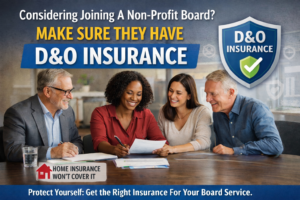 Joining a non‑profit board can be one of the most rewarding ways to give back to your community. You can help shape meaningful missions, support causes you care about, and work with passionate volunteers. But before you sign on the dotted line, there’s one piece of protection every board member should ask about: Non Profit Directors & Officers (D&O) insurance.
After all, you do not want your volunteer work to ruin your personal finances.
Directors and Officers insurance protects board members and executives from personal financial loss if they are sued for decisions made while serving on the board. It also helps cover legal defense costs and settlements. Even with the best intentions, well‑meaning board members can face claims that threaten personal finances and long‑term reputation.
In this article, we’ll explain what D&O insurance is, why it’s critical for non‑profit boards, real claims examples, what good coverage looks like, how Huff Insurance can help, and tips for board members evaluating nonprofits.
What Is Non-Profit D&O Insurance?
D&O insurance stands for Directors and Officers liability insurance. It is designed to protect the personal assets of board members and officers if someone brings a claim against them for actions taken in their official role.
D&O Insurance should be a vital piece for every non-profit’s insurance plan.
Board members don’t need to be wealthy to be sued. Lawsuits can happen for many reasons — from employment decisions to misunderstandings about financial oversight. Without D&O insurance, board members might be responsible for legal costs, settlements, or judgments out of pocket.
D&O insurance typically covers:
- Defense costs (attorney fees, court costs)
- Settlements or damages if the organization loses a lawsuit
- Claims from employees, volunteers, donors, or third parties
- Claims alleging breach of fiduciary duty, mismanagement, wrongful termination, or discrimination
This coverage is especially important in the nonprofit world, where budgets are often tight and legal exposure can come from unexpected directions.
Why Non‑Profit Boards Must Take D&O Insurance Seriously
Non‑profits face unique legal risks. Although they serve public good, they are not immune to claims. Worse, many board members assume they are fully protected by their altruistic mission or volunteer status — but that’s not true.
Volunteer Status Doesn’t Shield You From Lawsuits
Many well‑intentioned board members think that because they are volunteers, they are immune from legal risk. That is a dangerous assumption. Courts may still hold directors and officers personally liable if a claimant can show alleged mismanagement, breach of duty, or wrongful action.
Example:
A small animal rescue organization’s board decides to shelter more animals than the facility was equipped for. A volunteer slips and injures themselves during a chaotic transfer. The volunteer sues the organization — and board members are included in the claim, alleging negligent oversight. Without D&O insurance, legal defense costs come from personal savings.
Real‑Life Claims Scenarios for Non‑Profit Boards
Hearing real‑life examples helps board candidates fully understand how D&O insurance protects them. Below are scenarios seen across nonprofits of all sizes:
Scenario 1 — Employment Practices Claim
A nonprofit hires a new program director. After six months, the director is fired. The director files a lawsuit alleging wrongful termination and discrimination. The board members are named in the lawsuit.
- Without D&O insurance: Board members must pay for defense and any settlement out‑of‑pocket.
- With D&O insurance: The policy covers defense costs and any covered settlement.
Scenario 2 — Mismanagement of Funds
A community arts nonprofit loses a major grant due to a paperwork error. Donors and stakeholders claim the board failed to properly oversee financial compliance. They sue alleging breach of fiduciary duty.
- Without D&O protection: Board members could be personally liable.
- With D&O insurance: Defense and settlement costs are paid by the insurer, up to policy limits.
Scenario 3 — Donor Sued the Board
In a fundraising campaign, a donor claims the nonprofit misrepresented how funds would be used. The donor sues, naming board members.
- Result with D&O: Board members don’t have to use personal assets to defend themselves.
- Lesson: Even genuine misunderstandings can lead to legal claims.
What D&O Insurance Covers — and What It Doesn’t
Not all D&O insurance is the same. Coverage varies by policy and provider, so when evaluating a nonprofit plan, board members should understand what is included.
Typical D&O Coverage Elements
- Defense costs: Legal fees and court costs.
- Judgments and settlements: Payment for claims against directors and officers.
- Employment practices liability (EPL): Coverage for claims like wrongful termination and discrimination.
- Loss of organization: Reimbursement if the nonprofit indemnifies board members.
What D&O Policies Usually Do Not Cover
- Fraud or criminal acts
- Intentional wrongdoing
- Bodily injury or property damage (covered under general liability)
- Prior acts unless retroactive coverage is included
Always read the policy terms and ask for clarification about what is covered — including limits, exclusions, and conditions.
What If There’s No D&O Insurance?
Many nonprofit board members assume their personal policies will protect them — but that’s not the case.
Homeowners Insurance Won’t Help
Your home insurance probably does not cover actions taken while serving as a board member. It’s designed for personal liability, not boardroom decisions.
Personal Umbrella Insurance Usually Excludes Board Activity
Most personal umbrella policies exclude liability from nonprofit or professional board roles, even if unpaid. While rare endorsements may exist, they typically offer minimal protection.
Without D&O Insurance, You Could Be Personally Liable
If your nonprofit is sued and has no D&O coverage, you could be forced to pay legal fees or settlements out of pocket. Even baseless lawsuits can cost tens of thousands of dollars just in defense costs. That’s why securing D&O insurance should be a top priority for any board.
How Much D&O Insurance Costs
Cost of D&O insurance can vary based on:
- Size of the nonprofit
- Annual revenue
- Number of board members
- Claims history
- Scope of operations (local vs. national, types of programs)
Even small nonprofits with modest budgets can often secure affordable D&O coverage. And the cost is small compared to the potential financial loss of a lawsuit.
Questions Every Board Candidate Should Ask About D&O Insurance
Before joining a board, ask leaders these key questions:
- Do they currently have D&O insurance? If so, who underwrites it?
- How much coverage do they carry and what are the policy limits?
- Does the policy include employment practices liability?
- Are past, present, and future directors covered?
- Who pays the premiums — the board or organization?
- Can the policy be reviewed by an independent agent?
Why Huff Insurance Can Help
At Huff Insurance, we specialize in helping nonprofit organizations understand and secure the right D&O insurance. As an independent insurance agent with access to multiple markets, we compare policies from top carriers to find coverage that fits your nonprofit’s needs.
We understand nonprofit boards — from small volunteer groups to complex foundations. When you work with Huff Insurance:
- You get personalized advice from experienced agents.
- You get access to multiple coverage options.
- You get protection that gives peace of mind as you serve.
Let us help protect your mission — and your board service — with the right D&O coverage.
How to Evaluate a Nonprofit’s Risk Profile
When considering a board position, think about these risk factors:
- Size of organization: Larger budgets and staff mean more exposure.
- Programs offered: More complex operations usually mean higher risk.
- Volunteer engagement: High volunteer turnover can increase claims.
- Grant compliance: Failure to manage grants can lead to disputes.
- Public visibility: High‑profile nonprofits attract more scrutiny.
Even small nonprofits should carry D&O insurance. Volunteer board members deserve protection regardless of organizational size.
Tips for New Board Members
Board service is a leadership role. To help protect yourself and your organization:
- Ask for an orientation on policies and insurance coverage.
- Ensure the nonprofit has D&O, general liability, and EPLI coverage.
- Attend regular meetings and understand your fiduciary responsibilities.
- Request a copy of the D&O policy or a summary of benefits.
Frequently Asked Questions (FAQ)
1. What is the difference between D&O insurance and general liability insurance?
D&O insurance protects board members from lawsuits related to decisions made while serving. General liability protects against bodily injury or property damage claims. They cover very different risks.
2. Do nonprofit board members have to pay for lawsuits out of pocket?
Yes — if there’s no D&O insurance or indemnification, you could be personally responsible for legal defense and damages. That’s why D&O is essential.
3. Can D&O insurance cover employment disputes?
Yes. Many D&O policies include or can add employment practices liability (EPL) to cover wrongful termination, harassment, or discrimination claims.
4. Does D&O insurance cover past board members?
Some policies do, especially if they include retroactive coverage. Always confirm whether past directors are insured for prior decisions.
5. Will my home insurance or umbrella policy cover board member liability?
Typically not. Home and umbrella insurance exclude liability related to nonprofit or organizational leadership. Only D&O coverage provides proper protection.
If you’re considering a board position, protect yourself and your fellow directors with the right insurance. Contact Huff Insurance today to explore your nonprofit’s D&O insurance options. We’re here to help you serve with confidence.